
Designing a receiver isn't easy. You worry a strong interfering signal will saturate your downconverter. The result is a distorted signal, making your whole system useless.
The best way to balance performance is to relax the downconverter's conversion loss to 8-12 dB1. This allows for a higher IP3, giving you a much wider dynamic range2. Also, add a filter before the mixer to suppress interference and image frequencies, which can improve dynamic range by over 15 dB.
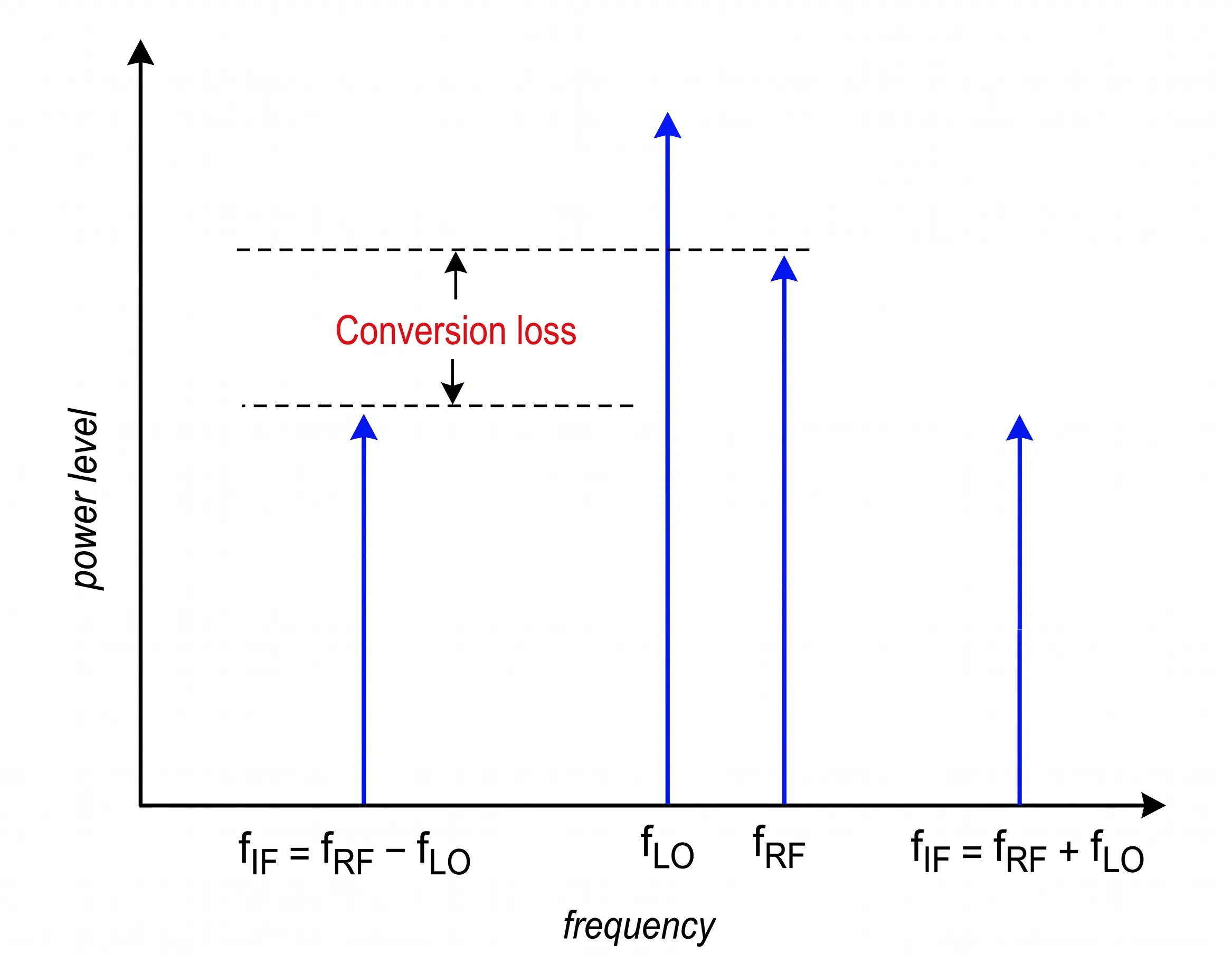
It feels wrong to accept more loss in a system. I get it. But as RF engineers, we know that performance is a game of trade-offs. Sometimes, a small, strategic sacrifice in one area gives you a massive advantage somewhere else. Let's explore why this approach is so effective and how it can save your next receiver design from failure. This is about building a robust system that works in the real world, not just in a perfect lab environment.
Why does focusing only on LNA gain and NF backfire?
You selected a top-tier LNA with amazing noise figure and gain specs. But your receiver still fails when a strong, nearby signal appears. The problem is not your LNA.
Focusing only on the LNA is a classic trap. The LNA's high gain amplifies everything, including powerful interferers. This massive signal then hits your downconverter mixer and pushes it into saturation. Your desired signal gets completely distorted, ruining the entire receiver's performance.
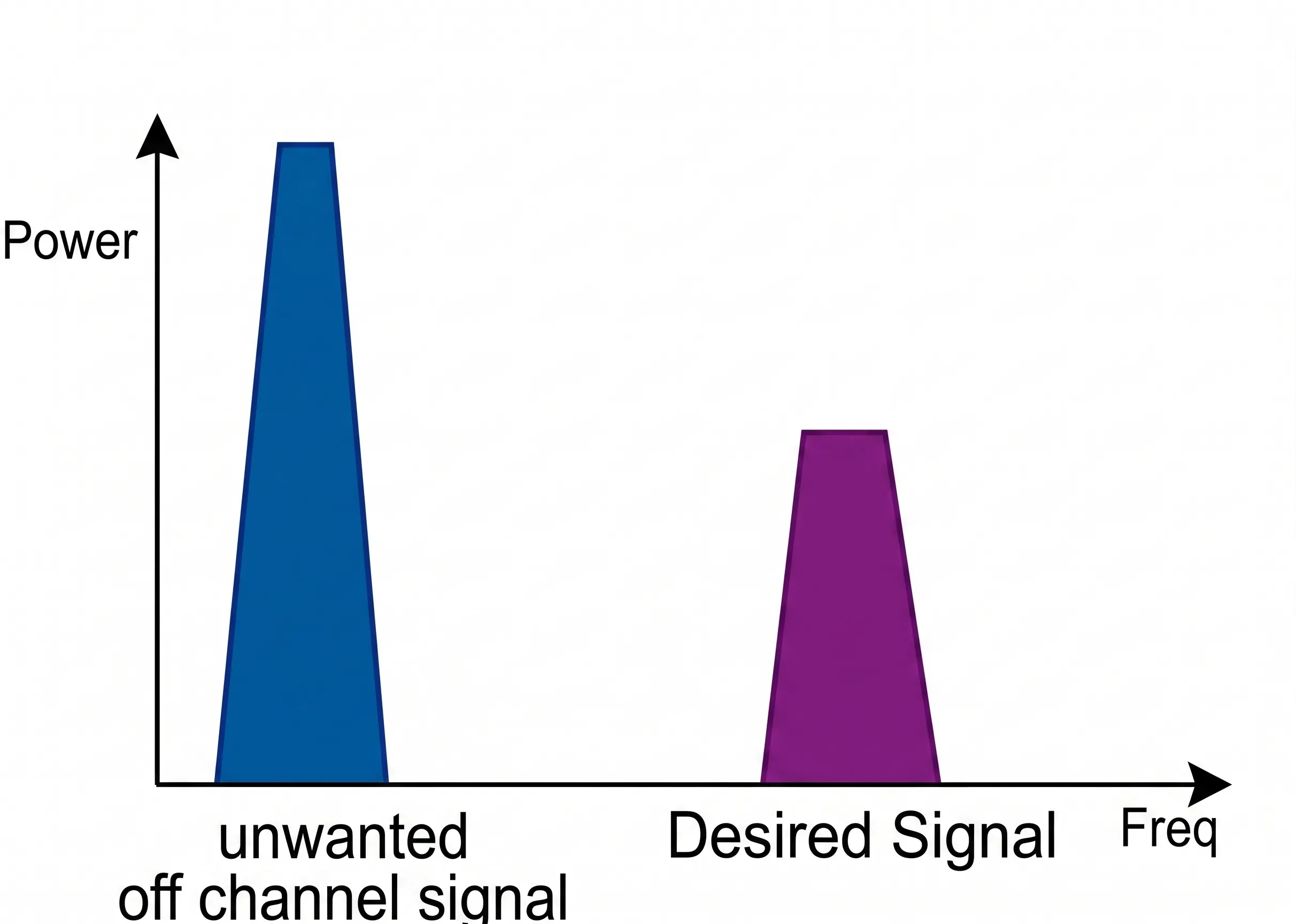
I remember a project from my early days as an engineer. We spent weeks optimizing the front-end LNA. We chased every tenth of a dB in noise figure. In the lab, the system's sensitivity was incredible. We were proud. But the first time we tested it in the field, near a cellular tower, the receiver was completely deaf to our weak signal. The LNA was doing its job perfectly, but it was also amplifying the giant cell signal, which then totally overwhelmed the mixer that followed. That was a tough lesson. A receiver chain is only as strong as its weakest link.
The Chain Reaction of Saturation
The job of an LNA is to amplify weak signals, but it can't tell the difference between your signal and interference. It amplifies both. When this combined, high-power signal hits the mixer, it can push the mixer beyond its linear operating range. This is where you run into compression and distortion. The mixer's ability to handle strong signals is defined by its 1dB compression point (P1dB) and third-order intercept point (IP3)3. If the input power exceeds these limits, performance collapses.
| cURL Too many subrequests by single Worker invocation. To configure this limit, refer to https://developers.cloudflare.com/workers/wrangler/configuration/#limits | cURL Too many subrequests by single Worker invocation. To configure this limit, refer to https://developers.cloudflare.com/workers/wrangler/configuration/#limits | The Trap |
|---|---|---|
| LNA | Low NF, High Gain | Amplifies strong interferers along with the desired signal. |
| Mixer | Linearity (IP3) | The amplified interferer from the LNA pushes the mixer into non-linearity. |
| System Result | Performance | Distortion, loss of desired signal, and reduced dynamic range. |
How can higher conversion loss improve dynamic range?
You hear "more loss" and think it's a bad design choice. It feels like you are hurting your receiver's sensitivity on purpose. But this trade-off is often the secret to survival.
By accepting a slightly higher conversion loss, typically between 8-12 dB, you can choose a mixer with a much higher IP3. A higher IP3 means better linearity. This allows the mixer to handle stronger signals without creating distortion, directly widening your receiver's dynamic range.
| cURL Too many subrequests by single Worker invocation. To configure this limit, refer to https://developers.cloudflare.com/workers/wrangler/configuration/#limits | Model A | Model B |
|---|---|---|
| Min Frequency,RF/LO (MHz) | 4200 | 5000 |
| Max Frequency,RF/LO (MHz) | 6000 | 33000 |
| Min Frequency,IF (MHz) | 0 | 0 |
| Max Frequency,IF (MHz) | 2000 | 5000 |
| Conversion Loss(dB) | 5.8 | 9 |
| IIP3(dBm) | 7 | 23 |
In mixer design, there is often a direct trade-off between conversion loss and linearity4. To build a mixer that can handle very strong signals without distorting them (high IP3), the internal design might need more power or a structure that naturally introduces more loss. So, why would we make this trade? It's all about protecting the signal. cURL Too many subrequests by single Worker invocation. To configure this limit, refer to https://developers.cloudflare.com/workers/wrangler/configuration/#limits5. cURL Too many subrequests by single Worker invocation. To configure this limit, refer to https://developers.cloudflare.com/workers/wrangler/configuration/#limits. cURL Too many subrequests by single Worker invocation. To configure this limit, refer to https://developers.cloudflare.com/workers/wrangler/configuration/#limits6. cURL Too many subrequests by single Worker invocation. To configure this limit, refer to https://developers.cloudflare.com/workers/wrangler/configuration/#limits.
cURL Too many subrequests by single Worker invocation. To configure this limit, refer to https://developers.cloudflare.com/workers/wrangler/configuration/#limits
cURL Too many subrequests by single Worker invocation. To configure this limit, refer to https://developers.cloudflare.com/workers/wrangler/configuration/#limits.
| cURL Too many subrequests by single Worker invocation. To configure this limit, refer to https://developers.cloudflare.com/workers/wrangler/configuration/#limits | cURL Too many subrequests by single Worker invocation. To configure this limit, refer to https://developers.cloudflare.com/workers/wrangler/configuration/#limits | IP3 | cURL Too many subrequests by single Worker invocation. To configure this limit, refer to https://developers.cloudflare.com/workers/wrangler/configuration/#limits |
|---|---|---|---|
| cURL Too many subrequests by single Worker invocation. To configure this limit, refer to https://developers.cloudflare.com/workers/wrangler/configuration/#limits | cURL Too many subrequests by single Worker invocation. To configure this limit, refer to https://developers.cloudflare.com/workers/wrangler/configuration/#limits | Low | cURL Too many subrequests by single Worker invocation. To configure this limit, refer to https://developers.cloudflare.com/workers/wrangler/configuration/#limits. |
| cURL Too many subrequests by single Worker invocation. To configure this limit, refer to https://developers.cloudflare.com/workers/wrangler/configuration/#limits | cURL Too many subrequests by single Worker invocation. To configure this limit, refer to https://developers.cloudflare.com/workers/wrangler/configuration/#limits | 高 | cURL Too many subrequests by single Worker invocation. To configure this limit, refer to https://developers.cloudflare.com/workers/wrangler/configuration/#limits. |
What is the role of filtering before the downconverter?
cURL Too many subrequests by single Worker invocation. To configure this limit, refer to https://developers.cloudflare.com/workers/wrangler/configuration/#limits.
cURL Too many subrequests by single Worker invocation. To configure this limit, refer to https://developers.cloudflare.com/workers/wrangler/configuration/#limits.
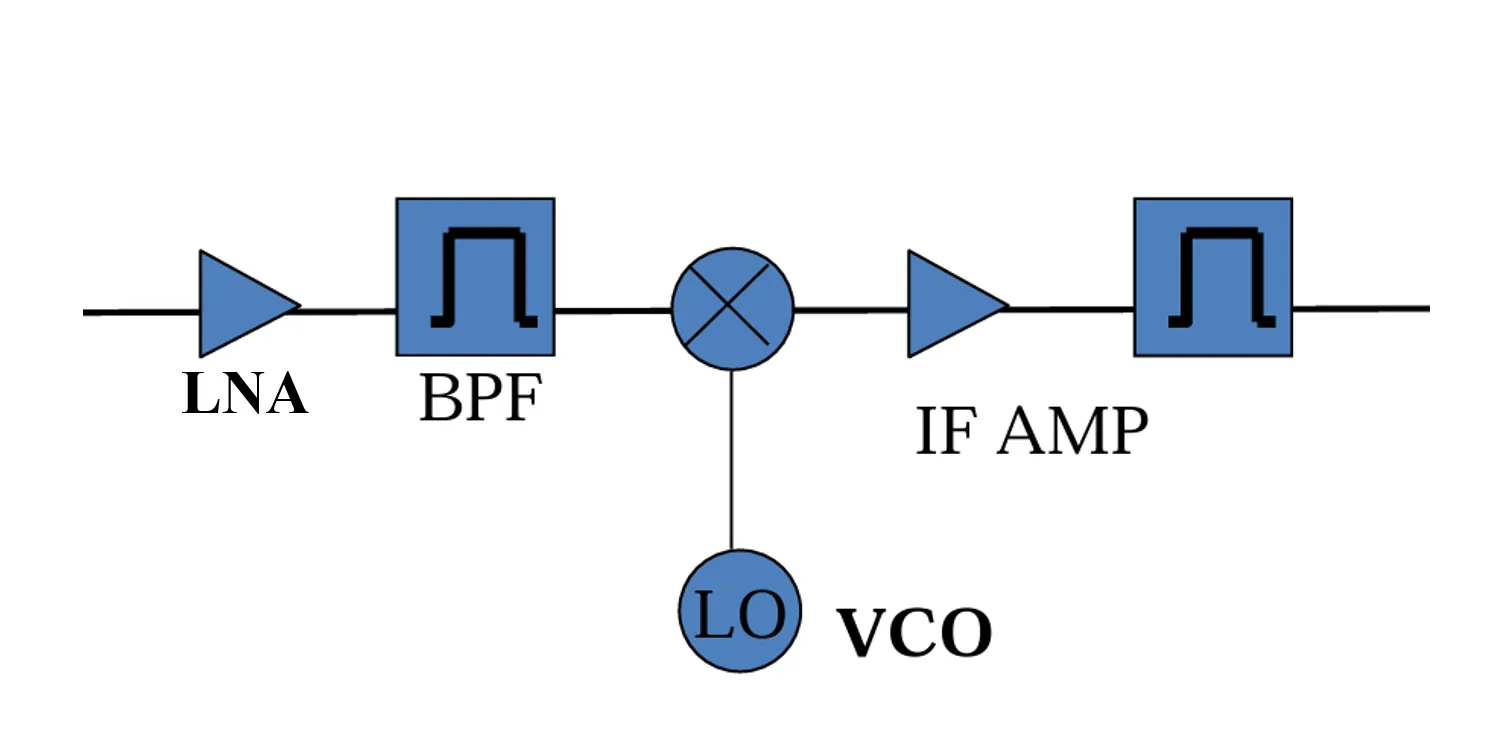
cURL Too many subrequests by single Worker invocation. To configure this limit, refer to https://developers.cloudflare.com/workers/wrangler/configuration/#limits.
cURL Too many subrequests by single Worker invocation. To configure this limit, refer to https://developers.cloudflare.com/workers/wrangler/configuration/#limits
cURL Too many subrequests by single Worker invocation. To configure this limit, refer to https://developers.cloudflare.com/workers/wrangler/configuration/#limits. cURL Too many subrequests by single Worker invocation. To configure this limit, refer to https://developers.cloudflare.com/workers/wrangler/configuration/#limits.7 cURL Too many subrequests by single Worker invocation. To configure this limit, refer to https://developers.cloudflare.com/workers/wrangler/configuration/#limits.
結論
For a robust receiver, look beyond just LNA specs. Balance your downconverter's loss and linearity, and always use a pre-mixer filter to protect your system from real-world interference.
"[PDF] Mixer Conversion Loss", http://www.ittc.ku.edu/~jstiles/622/handouts/Mixer%20Conversion%20Loss.pdf. Technical papers and application notes on RF mixer design show that mixers optimized for high linearity (high IP3) often have higher conversion loss, with values commonly falling in or around the 8-12 dB range, as a fundamental design trade-off. Evidence role: general_support; source type: paper. Supports: The claim that accepting higher conversion loss, often in the 8-12 dB range, is a common strategy to achieve a higher IP3 in mixers.. ↩
"IP3 and Intermodulation Guide - Analog Devices", https://www.analog.com/en/resources/technical-articles/ip3-and-intermodulation-guide.html. Educational resources on RF engineering explain that mixer architectures achieving higher linearity (IP3) often do so at the expense of higher conversion loss. A higher IP3 value allows the receiver to handle stronger signals without distortion, thus increasing the system's overall dynamic range. Evidence role: mechanism; source type: education. Supports: The claim that there is a trade-off between conversion loss and IP3, and that a higher IP3 directly contributes to a wider dynamic range.. ↩
"What is P1dB? - everything RF", https://www.everythingrf.com/community/what-is-p1db. The 1dB compression point (P1dB) is the input power level at which the mixer's gain decreases by 1 dB from its linear gain, while the third-order intercept point (IP3) is a theoretical point where the power of the fundamental signal and the third-order distortion products would be equal. Both are critical metrics for characterizing the linearity of an RF device. Evidence role: definition; source type: encyclopedia. Supports: The definition of P1dB and IP3 as key metrics for mixer performance.. ↩
"Active vs. Passive RF Mixers: Weighing the Trade-offs in Frequency ...", https://www.electronics-notes.com/articles/radio/rf-mixer/active-vs-passive-rf-mixers-tradeoffs-advantages-disadvantages.php. Research on RF mixer topologies shows that design choices that improve linearity, such as using higher bias currents in active mixers or specific passive structures, often result in increased conversion loss. This trade-off is a fundamental challenge in receiver front-end design. Evidence role: mechanism; source type: paper. Supports: The claim that a trade-off exists between conversion loss and linearity in mixers.. ↩
"Spurious-free dynamic range - Wikipedia", https://en.wikipedia.org/wiki/Spurious-free_dynamic_range. In RF systems, dynamic range refers to the ratio between the maximum input signal that can be processed without significant distortion and the minimum detectable signal, which is limited by the system's noise floor. A common metric is the Spurious-Free Dynamic Range (SFDR). Evidence role: definition; source type: education. Supports: The definition of dynamic range in the context of an RF receiver.. ↩
"Third-order intercept point - Wikipedia", https://en.wikipedia.org/wiki/Third-order_intercept_point. The third-order intercept point (IP3) is a critical parameter in the formula for calculating a receiver's spurious-free dynamic range (SFDR). A higher IP3 value directly translates to a higher maximum signal level that can be handled before in-band distortion products rise above the noise floor, thus 'raising the ceiling' of the dynamic range. Evidence role: mechanism; source type: paper. Supports: The claim that a higher IP3 value leads to a higher upper limit for the dynamic range.. ↩
"Mixer Image Frequency - RF Cafe", https://www.rfcafe.com/references/electrical/image-frequency.htm. In a heterodyne receiver, the image frequency is an undesired input frequency that is located on the opposite side of the local oscillator (LO) frequency from the desired RF signal by the same intermediate frequency (IF) offset. If not filtered before the mixer, it will be converted to the same IF, causing interference. Evidence role: definition; source type: encyclopedia. Supports: The definition of image frequency.. ↩

 Japanese
  English
  Spanish
  French
  Arabic
  Vietnamese
  Indonesian
  Hindi
Hindi  Danish
  Bulgarian