
Ever wondered how massive amounts of satellite data reach us clearly? It's not as simple as pointing a dish, as signal loss and distortion are huge challenges.
Up/down conversion is crucial for satellite communication. It lets us use smaller antennas by transmitting at high frequencies. It also steps down the received frequency, preventing signal distortion and enabling accurate data recovery by the system's electronics.
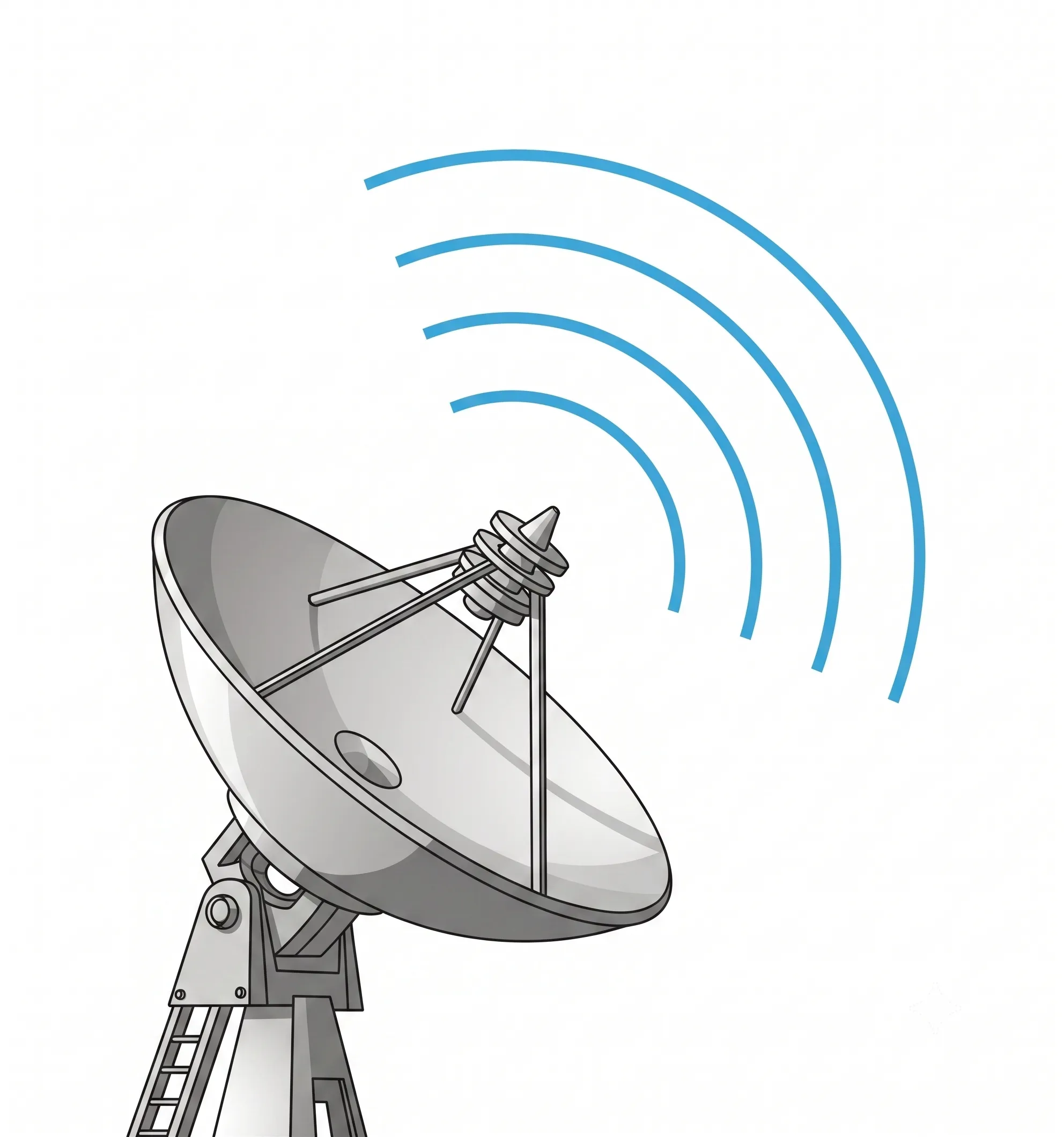
This process might sound technical, but it's the backbone of reliable satellite links. I remember a new salesperson asking me this exact question. Understanding it is key to appreciating the engineering behind every clear satellite call or data stream. This process is not just a single step; it’s a carefully orchestrated journey for the signal, both on its way up to the satellite and on its way back down. Let's break down why this journey is so important.
Why do satellites need to up-convert signals before transmitting?
Sending a signal from the ground to a satellite faces a huge challenge: distance and atmospheric interference. A weak, low-frequency signal would simply get lost or require an impractically large antenna.
Satellites up-convert signals to transmit at higher frequencies, like the Ka-band1. This allows for smaller, more efficient antennas on both the ground and the satellite. Higher frequencies also provide wider bandwidth2, enabling faster data transmission rates for modern communication demands.
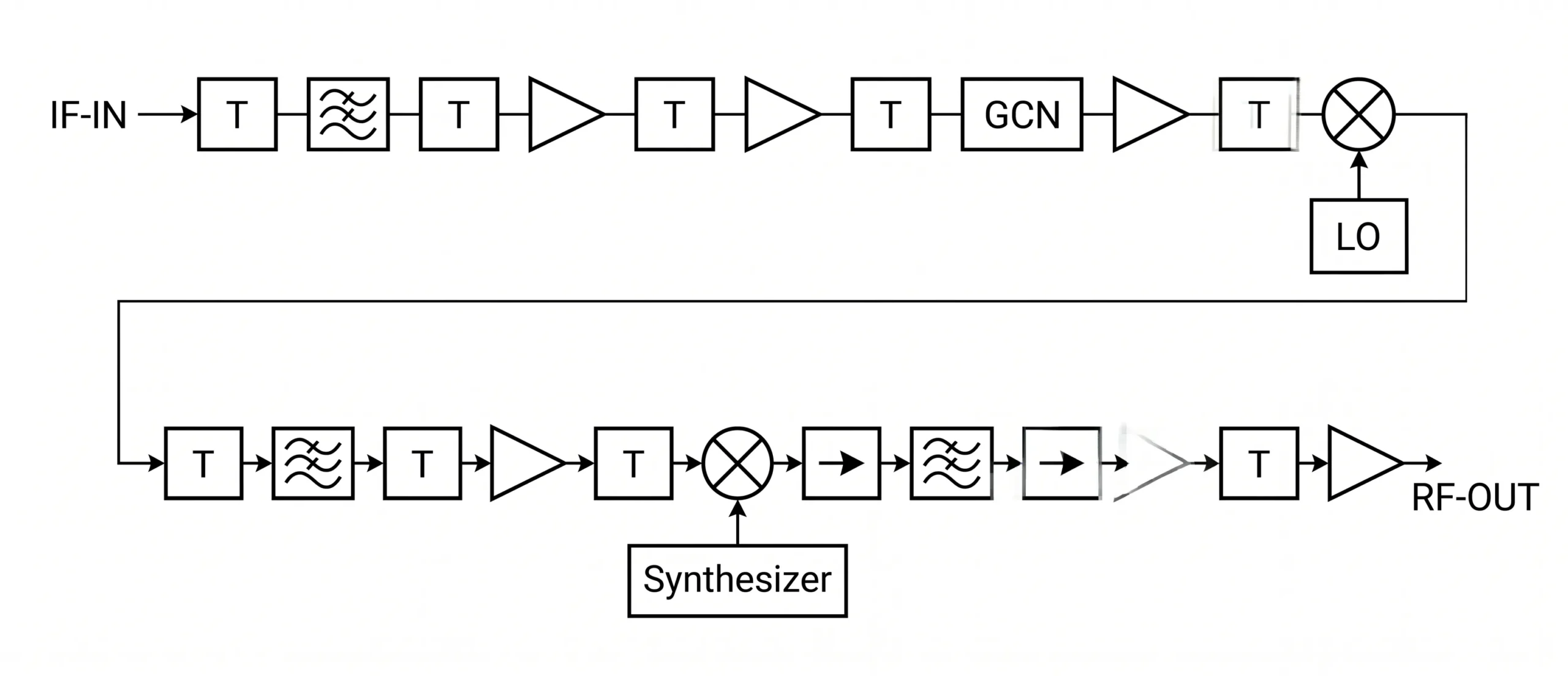
When we design a satellite communication system, our first goal is to get the signal from the ground station to the satellite efficiently. This process is called the uplink. The magic here is up-conversion, which is usually done by a component called a Block Upconverter, or BUC. We convert the signal from a lower intermediate frequency (IF) to a much higher radio frequency (RF), like the Ku or Ka-band.
There are a few critical reasons for this. First, antenna size is inversely proportional to frequency3. A higher frequency means a shorter wavelength, which allows for a smaller, lighter, and more focused antenna to achieve the same gain. This is vital for satellites, where size and weight are everything. Second, higher frequency bands offer significantly more bandwidth. Think of it like a highway; a wider highway can handle more traffic. This wider bandwidth is what enables high-speed satellite internet, 4K video streaming, and other data-intensive applications. Finally, the up-conversion process is paired with powerful amplification. After converting the signal to its final high frequency, it passes through a High Power Amplifier (HPA). At Safari Microwave, we develop products for this exact application, like our 3000-watt saturated power amplifier, which gives the signal the brute force it needs to travel thousands of kilometers through the atmosphere and space without getting lost in noise.
Why is a multi-stage down-conversion process so important for receivers?
A high-frequency signal arrives from a satellite, packed with data. But your receiver's electronics can't process it directly, as it would be completely overwhelmed by the speed of the signal.
Multi-stage down-conversion is vital for receivers. It systematically lowers the high-frequency satellite signal to an intermediate frequency (IF) that the Analog-to-Digital Converter (ADC) can handle. This prevents signal distortion and ensures the original data can be accurately demodulated.
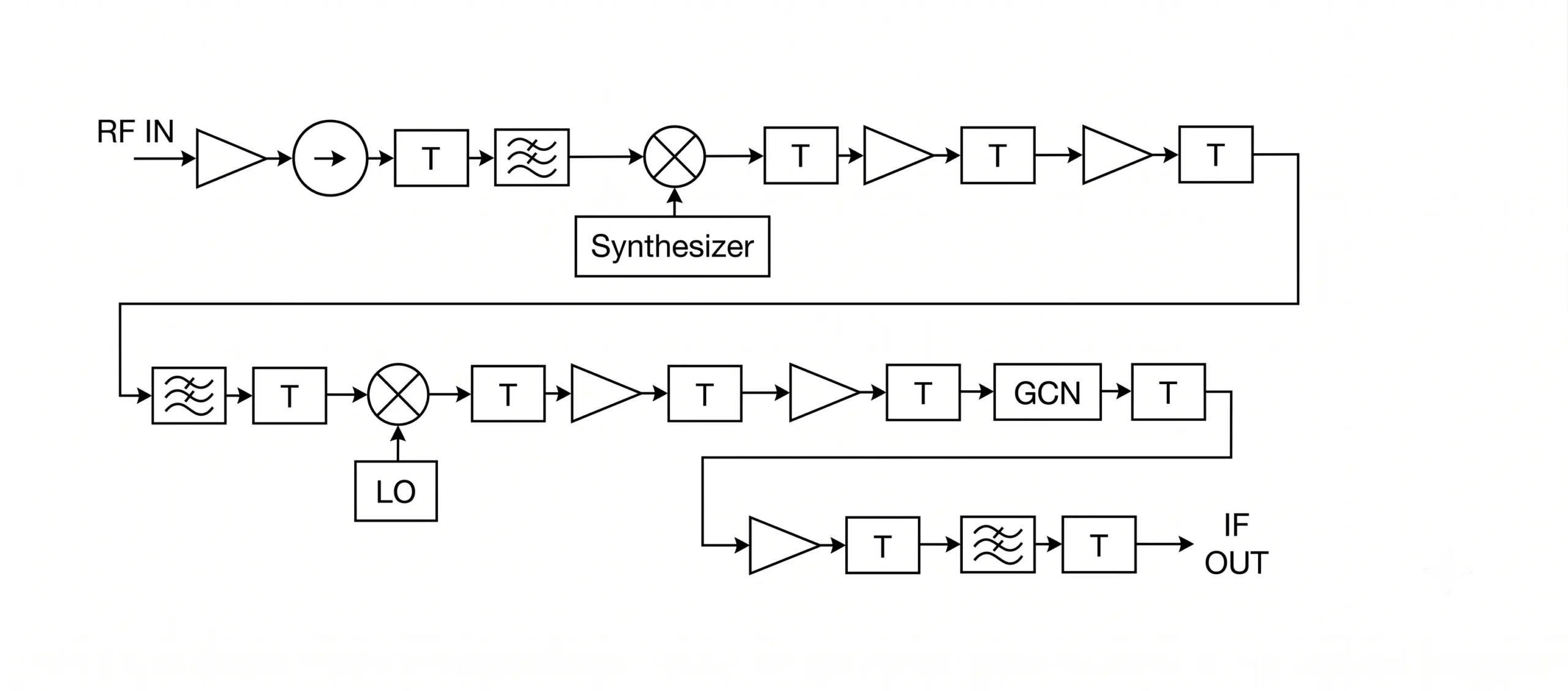
Once the signal completes its journey from the satellite, the receiver has the difficult job of turning it back into usable data. You can't just feed a 20 GHz Ka-band signal directly into a digital processor. The Analog-to-Digital Converter (ADC), the component that translates the analog wave into digital ones and zeros, would need to sample at an impossibly high rate. This would not only be extremely expensive but would also introduce massive signal distortion, making data recovery impossible. This is why we use a careful, two-stage down-conversion process, often performed by a Low-Noise Block downconverter (LNB).
Stage 1: The First Frequency Drop
The first step is to bring the high RF frequency down to a more manageable first Intermediate Frequency (IF), often around 4 GHz. This is done by mixing the incoming signal with a signal from a local oscillator. A critical part of this stage is filtering out the "image frequency"—an unwanted byproduct of the mixing process that can corrupt the real signal4.
Stage 2: Getting Ready for Digital
Even 4 GHz is too high for most ADCs. So, a second stage of mixing and filtering brings the signal down to the L-band (around 1-2 GHz). This final IF is well within the capabilities of modern ADCs. This controlled, two-step approach is how we maintain excellent signal integrity. As I explained to my team, this precision is what allows us to control the Error Vector Magnitude (EVM)5 to within 2.5%, a key measure of signal quality. This process starts with our ultra-low noise amplifiers (LNAs), some with a noise figure as low as 0.5 dB, ensuring the faint satellite signal is cleanly amplified from the very start.
How can you be sure your converter design will work in the real world?
Designing complex frequency converters on paper is one thing. You can make all the calculations you want, but the real world has other plans. Small imperfections can ruin performance.
We verify our converter designs using advanced computer simulation software. This allows us to model the entire signal chain, predict performance, and identify potential issues like signal distortion or interference before manufacturing. This virtual testing ensures the final product meets exact specifications.
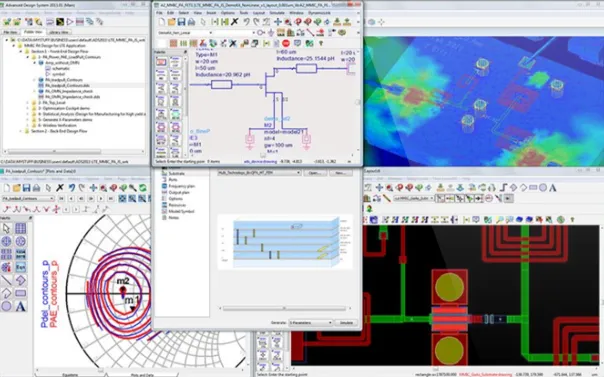
Building and testing physical prototypes is slow and expensive. A tiny miscalculation in the design phase can lead to a cascade of problems, wasting time and resources. That's why we rely heavily on computer simulation to test and perfect our converter designs before a single component is soldered6. We create a digital twin of the entire converter system. We use precise models for every component in the signal path, from the mixers and filters to our own high-performance amplifiers and PIN diode switches. Because we design and manufacture these components, we can use their exact measured performance data (S-parameters) in our simulations for unmatched accuracy. This virtual environment allows us to run exhaustive tests and analyze key performance metrics.
| Metric Analyzed | What It Tells Us | რატომ არის მნიშვნელოვანი |
|---|---|---|
| Gain & Flatness | Consistency of amplification across the band | Ensures all parts of the signal are treated equally. |
| ხმაურის ფიგურა (NF)7 | How much noise the system adds to the signal | A low NF is critical for receiving weak signals. |
| Linearity (P1dB, IP3)8 | cURL Too many subrequests by single Worker invocation. To configure this limit, refer to https://developers.cloudflare.com/workers/wrangler/configuration/#limits | cURL Too many subrequests by single Worker invocation. To configure this limit, refer to https://developers.cloudflare.com/workers/wrangler/configuration/#limits. |
| EVM | cURL Too many subrequests by single Worker invocation. To configure this limit, refer to https://developers.cloudflare.com/workers/wrangler/configuration/#limits" | cURL Too many subrequests by single Worker invocation. To configure this limit, refer to https://developers.cloudflare.com/workers/wrangler/configuration/#limits. |
| cURL Too many subrequests by single Worker invocation. To configure this limit, refer to https://developers.cloudflare.com/workers/wrangler/configuration/#limits | cURL Too many subrequests by single Worker invocation. To configure this limit, refer to https://developers.cloudflare.com/workers/wrangler/configuration/#limits | cURL Too many subrequests by single Worker invocation. To configure this limit, refer to https://developers.cloudflare.com/workers/wrangler/configuration/#limits. |
cURL Too many subrequests by single Worker invocation. To configure this limit, refer to https://developers.cloudflare.com/workers/wrangler/configuration/#limits.
საბოლოო შედეგი
cURL Too many subrequests by single Worker invocation. To configure this limit, refer to https://developers.cloudflare.com/workers/wrangler/configuration/#limits.
"cURL Too many subrequests by single Worker invocation. To configure this limit, refer to https://developers.cloudflare.com/workers/wrangler/configuration/#limits. ↩
"cURL Too many subrequests by single Worker invocation. To configure this limit, refer to https://developers.cloudflare.com/workers/wrangler/configuration/#limits,
. cURL Too many subrequests by single Worker invocation. To configure this limit, refer to https://developers.cloudflare.com/workers/wrangler/configuration/#limits. ↩"cURL Too many subrequests by single Worker invocation. To configure this limit, refer to https://developers.cloudflare.com/workers/wrangler/configuration/#limits. ↩
"cURL Too many subrequests by single Worker invocation. To configure this limit, refer to https://developers.cloudflare.com/workers/wrangler/configuration/#limits. ↩
"cURL Too many subrequests by single Worker invocation. To configure this limit, refer to https://developers.cloudflare.com/workers/wrangler/configuration/#limits. ↩
"cURL Too many subrequests by single Worker invocation. To configure this limit, refer to https://developers.cloudflare.com/workers/wrangler/configuration/#limits. ↩
"cURL Too many subrequests by single Worker invocation. To configure this limit, refer to https://developers.cloudflare.com/workers/wrangler/configuration/#limits. ↩
"[PDF] P1dB vs OIP3 Relationship - Cross Technologies, Inc.", https://www.crosstechnologies.com/technical/P1dB%20vs%20OIP3%20Relationship.pdf. A source can define the 1 dB compression point (P1dB) as the output power level at which the amplifier's gain has dropped by 1 dB from its small-signal value, indicating the onset of saturation. The third-order intercept point (IP3) is a theoretical point that quantifies the amplifier's linearity with respect to third-order intermodulation distortion. Both are critical metrics for ensuring a system operates without significant signal distortion. Evidence role: definition; source type: education. Supports: The definition of P1dB and IP3 as key metrics for amplifier linearity.. ↩

 Georgian
  English
  Spanish (Spain)
  Arabic
  French (France)
  Vietnamese
  Indonesian
  Belarusian
  Moroccan Arabic
  Tibetan
  Danish
  Bulgarian
  Bosnian
  Catalan
  Frisian
  Japanese
  Bashkir
  Cebuano
  French (Belgium)
  Estonian
  Hindi
Hindi  Kurdish
  Tahitian
  Spanish (Colombia)
  Croatian
  Breton