
Choosing the wrong satellite frequency can skyrocket costs and cripple system performance. It's a mistake that can jeopardize your entire project before it even gets off the ground.
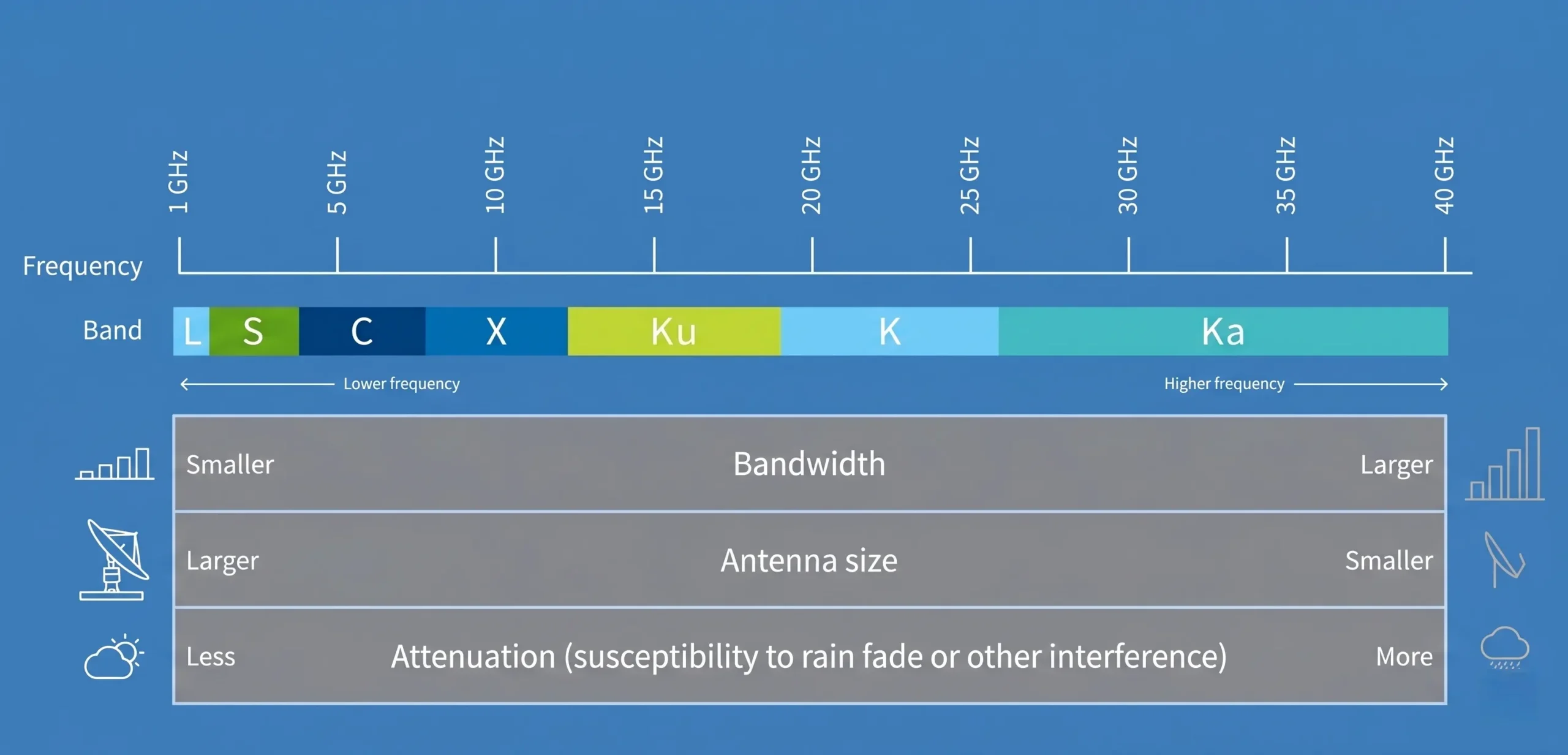
To select the right operating frequency, you must balance your application's need for bandwidth against factors like atmospheric attenuation1, component cost, and required link reliability. Lower frequencies offer robustness, while higher frequencies provide greater capacity but are more susceptible to weather.
My years of experience designing satellite communication systems2 have taught me one crucial lesson: always choose your frequency band based on need, not hype. The push for higher frequencies and more bandwidth is strong, but it's not always the right path. For young designers entering this field, understanding this trade-off is the first step toward building a successful and reliable system. Let’s dive into the key questions you should be asking.
Does Higher Frequency Always Mean Better Performance?
You see the massive bandwidth offered by Ka-band and think it's perfect for your project. But the fear of rain fade3 and high component costs could completely derail your plans.
No, a higher frequency does not automatically equal better performance. While it provides more bandwidth and allows for smaller antennas, it suffers significantly more from atmospheric losses. The best choice depends entirely on your specific requirements for data rate4, reliability, and operational environment.
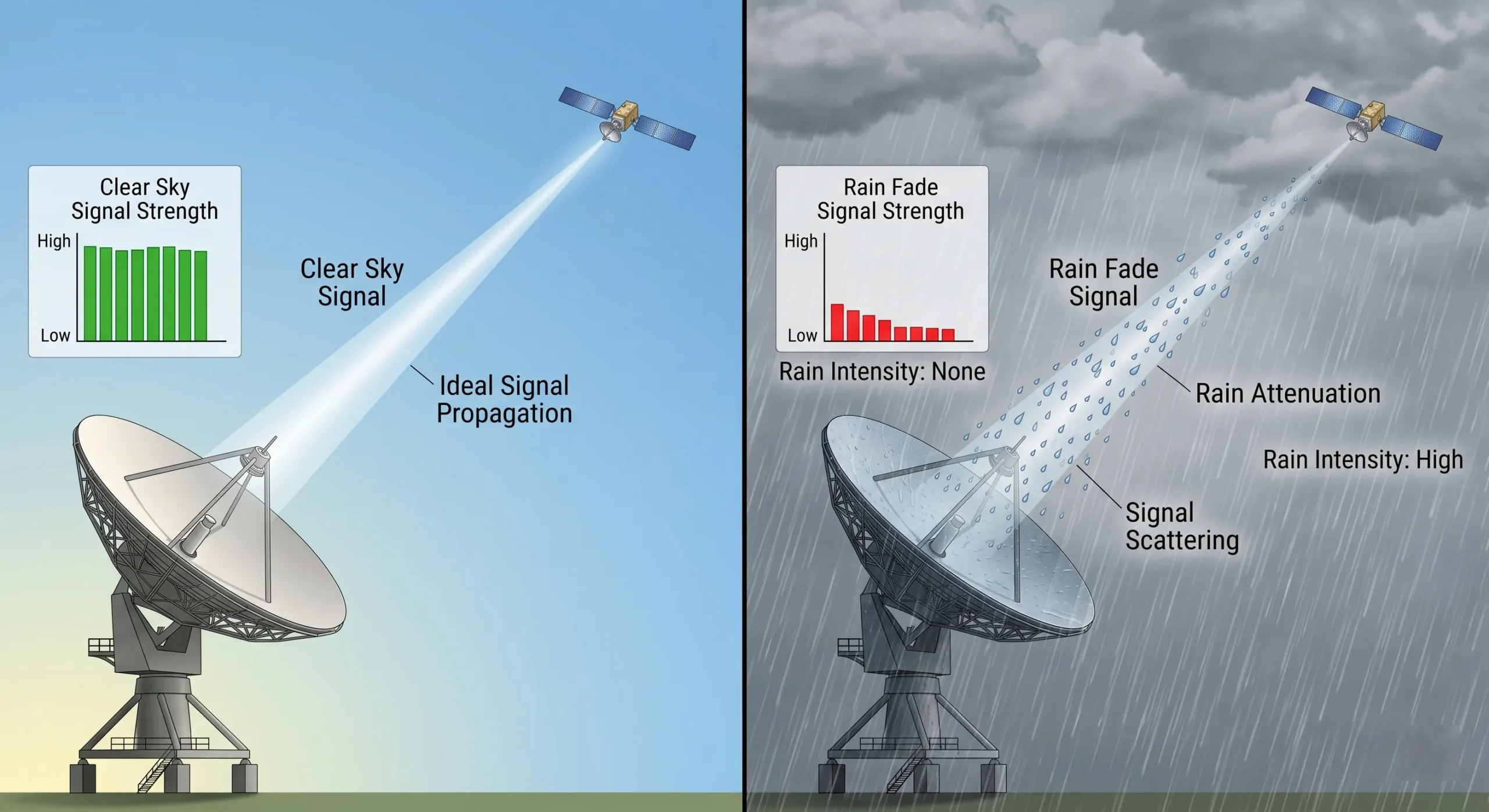
The relationship between frequency, bandwidth, and reliability is a fundamental trade-off in satellite communications. As you move up the spectrum from L-band to Ka-band, you gain access to wider swaths of bandwidth, which translates to higher data throughput. This is a huge advantage for data-intensive applications. However, this benefit comes at a price. Higher-frequency signals are much more easily absorbed and scattered by water vapor, rain, and other atmospheric conditions. This phenomenon, known as rain fade, can cause a complete loss of signal during heavy downpours, which is unacceptable for mission-critical services.
I remember a project for a critical communication system in a tropical region. The initial proposal called for Ku-band to maximize data rates. However, after analyzing the required 99.9% uptime, we realized that Ku-band would fail during the frequent, intense rainstorms. We switched the design to C-band. While we sacrificed some bandwidth, we gained the unwavering reliability the client demanded. That decision saved the project.
Bandwidth vs. Reliability
| Band | Gamme de fréquences (GHz) | Key Advantage | Key Disadvantage |
|---|---|---|---|
| L-Band | 1-2 | High reliability, tolerant to weather | Limited bandwidth, large antennas |
| S-Band | 2-4 | Good weather resistance | Congested spectrum, limited bandwidth |
| C-Band | 4-8 | Excellent reliability, resists rain fade | Requires large ground antennas |
| X-Band | 8-12 | Good balance of bandwidth & reliability | Primarily reserved for military/gov |
| Ku-Band | 12-18 | High bandwidth, smaller antennas | Susceptible to rain fade |
| K-Band | 18-26.5 | cURL Too many subrequests by single Worker invocation. To configure this limit, refer to https://developers.cloudflare.com/workers/wrangler/configuration/#limits | cURL Too many subrequests by single Worker invocation. To configure this limit, refer to https://developers.cloudflare.com/workers/wrangler/configuration/#limits |
| cURL Too many subrequests by single Worker invocation. To configure this limit, refer to https://developers.cloudflare.com/workers/wrangler/configuration/#limits | 26.5-40 | cURL Too many subrequests by single Worker invocation. To configure this limit, refer to https://developers.cloudflare.com/workers/wrangler/configuration/#limits | cURL Too many subrequests by single Worker invocation. To configure this limit, refer to https://developers.cloudflare.com/workers/wrangler/configuration/#limits |
How Does Your Application Dictate the Frequency Choice?
cURL Too many subrequests by single Worker invocation. To configure this limit, refer to https://developers.cloudflare.com/workers/wrangler/configuration/#limits.
cURL Too many subrequests by single Worker invocation. To configure this limit, refer to https://developers.cloudflare.com/workers/wrangler/configuration/#limits.
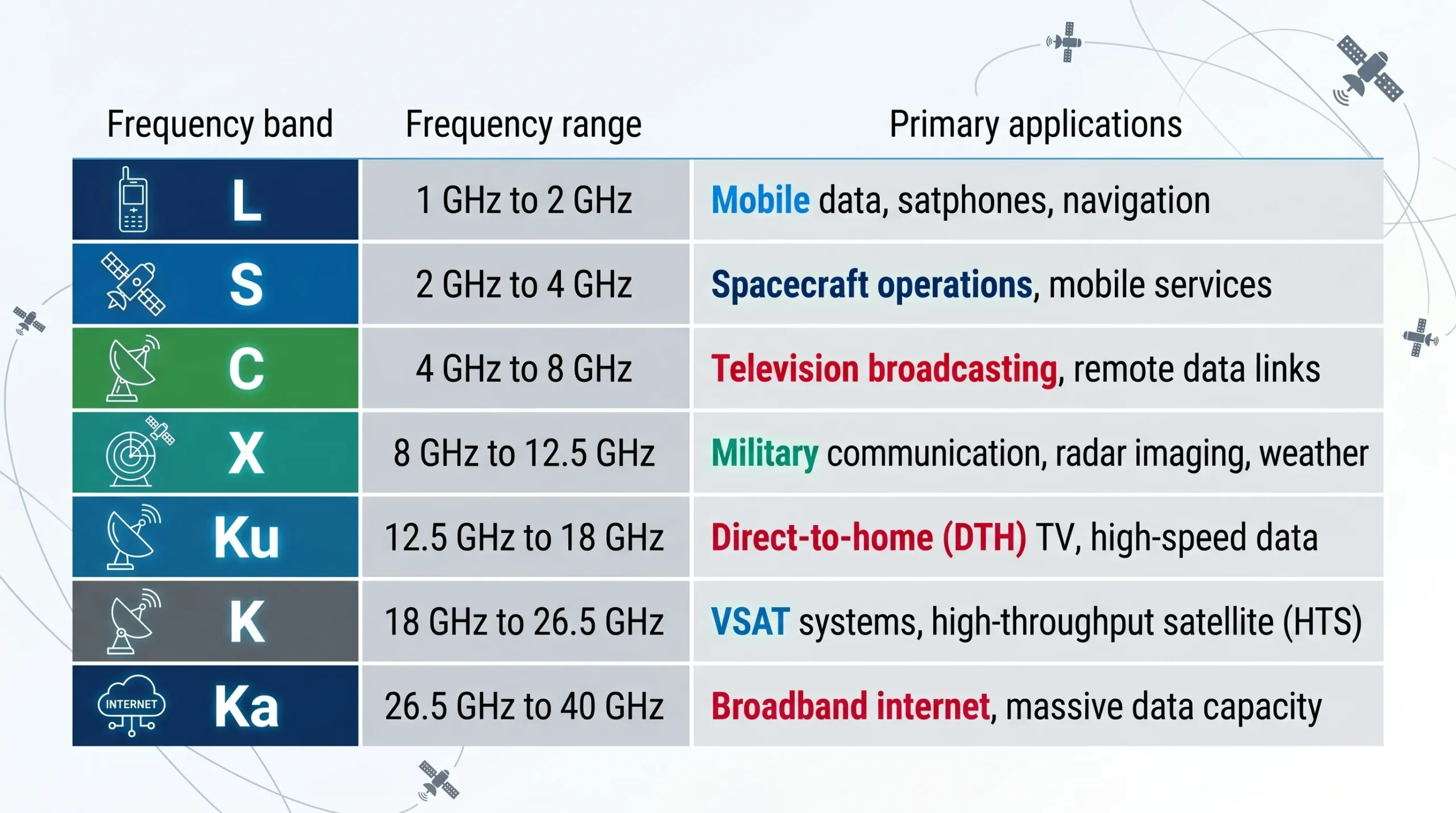
cURL Too many subrequests by single Worker invocation. To configure this limit, refer to https://developers.cloudflare.com/workers/wrangler/configuration/#limits.
cURL Too many subrequests by single Worker invocation. To configure this limit, refer to https://developers.cloudflare.com/workers/wrangler/configuration/#limits amplificateurs haute puissance5 cURL Too many subrequests by single Worker invocation. To configure this limit, refer to https://developers.cloudflare.com/workers/wrangler/configuration/#limits cURL Too many subrequests by single Worker invocation. To configure this limit, refer to https://developers.cloudflare.com/workers/wrangler/configuration/#limits6 cURL Too many subrequests by single Worker invocation. To configure this limit, refer to https://developers.cloudflare.com/workers/wrangler/configuration/#limits.
cURL Too many subrequests by single Worker invocation. To configure this limit, refer to https://developers.cloudflare.com/workers/wrangler/configuration/#limits
| Application | cURL Too many subrequests by single Worker invocation. To configure this limit, refer to https://developers.cloudflare.com/workers/wrangler/configuration/#limits | cURL Too many subrequests by single Worker invocation. To configure this limit, refer to https://developers.cloudflare.com/workers/wrangler/configuration/#limits |
|---|---|---|
| cURL Too many subrequests by single Worker invocation. To configure this limit, refer to https://developers.cloudflare.com/workers/wrangler/configuration/#limits | L-Band | cURL Too many subrequests by single Worker invocation. To configure this limit, refer to https://developers.cloudflare.com/workers/wrangler/configuration/#limits. |
| cURL Too many subrequests by single Worker invocation. To configure this limit, refer to https://developers.cloudflare.com/workers/wrangler/configuration/#limits | cURL Too many subrequests by single Worker invocation. To configure this limit, refer to https://developers.cloudflare.com/workers/wrangler/configuration/#limits | cURL Too many subrequests by single Worker invocation. To configure this limit, refer to https://developers.cloudflare.com/workers/wrangler/configuration/#limits. |
| cURL Too many subrequests by single Worker invocation. To configure this limit, refer to https://developers.cloudflare.com/workers/wrangler/configuration/#limits | cURL Too many subrequests by single Worker invocation. To configure this limit, refer to https://developers.cloudflare.com/workers/wrangler/configuration/#limits | Good balance of power, bandwidth, and consumer dish size. |
| VSAT Data Networks | Ku-Band, Ka-Band | High data rates for business, smaller dish size than C-band. |
| Military & Government (MILSATCOM) | X-Band, Ka-Band | Secure, high-bandwidth, anti-jamming features. |
| High-Throughput Satellites (HTS) | cURL Too many subrequests by single Worker invocation. To configure this limit, refer to https://developers.cloudflare.com/workers/wrangler/configuration/#limits | Massive bandwidth for consumer broadband services. |
What Are the Hidden Costs of Choosing a Frequency Band?
You've picked a high-frequency band for its amazing performance. Now you're staring at huge, unexpected bills for complex ground equipment and powerful amplifiers to make it work.
The hidden costs are in the ground segment7 hardware and link budget complexity. Higher frequencies require more precise antennas and more powerful, expensive amplifiers to overcome atmospheric losses. Lower frequency bands often use more affordable and widely available components.
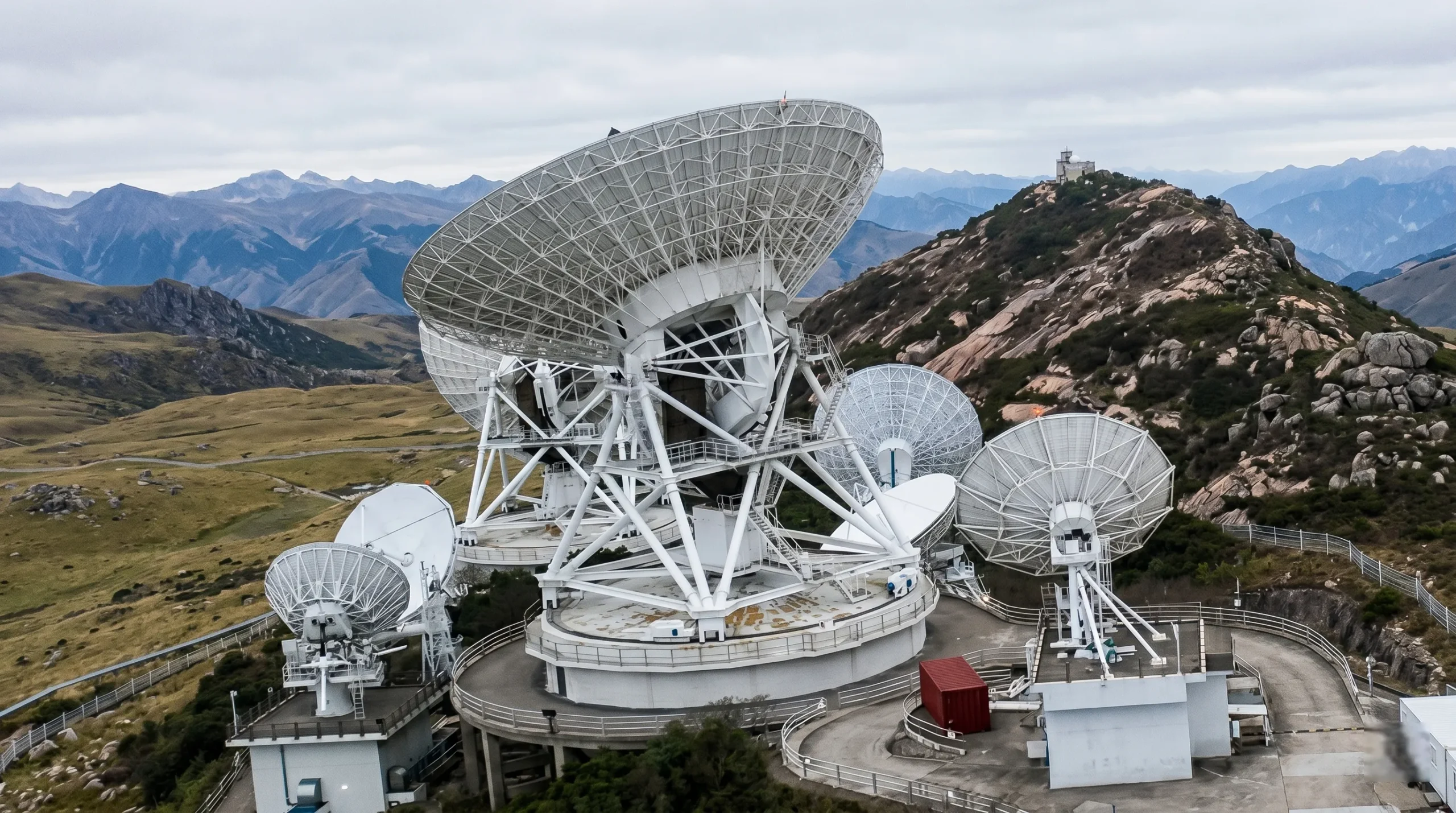
The price of leasing satellite bandwidth is only one part of the equation. The total cost of ownership is heavily influenced by the ground segment. As you move to higher frequencies like Ku-band and Ka-band, the physics of radio wave propagation works against you. Free space path loss increases with the square of the frequency, meaning less signal reaches your antenna. To compensate, you need higher-gain antennas, which are larger and must be pointed with extreme precision, increasing the cost of the positioner and tracking system. You also need more powerful amplifiers to push the signal through the atmosphere, especially through rain.
I learned this the hard way on an early project. We underestimated the cost of Ka-band ground terminals. The high-power amplifier needed to close the link budget during rain events was a significant line item we hadn't fully appreciated. It taught me to always analyze the entire system cost, from the antenna to the modem, before committing to a frequency band. This is where having access to premium-efficiency, high-power amplifiers, like the ones we engineer, can make a huge difference in the viability of a high-frequency system.
Conclusion
Don't blindly chase higher frequencies. A careful analysis of your application, environment, and total budget is the only way to select the right band for a successful satellite system.
"Rain attenuation frequency scaling - Wikipedia", https://en.wikipedia.org/wiki/Rain_attenuation_frequency_scaling. Atmospheric attenuation refers to the reduction in strength of radio signals as they pass through the Earth's atmosphere, primarily due to absorption and scattering by atmospheric constituents such as water vapor, oxygen, and precipitation, which is particularly significant at higher frequencies used in satellite communications. Evidence role: definition; source type: encyclopedia. Supports: To select the right operating frequency, you must balance your application's need for bandwidth against factors like atmospheric attenuation, component cost, and required link reliability.. ↩
"Communications satellite - Wikipedia", https://en.wikipedia.org/wiki/Communications_satellite. The term 'satellite communication systems' refers to the use of artificial satellites to relay and amplify radio telecommunications signals between a source and a receiver, forming an integral part of global telecommunications infrastructure. Evidence role: definition; source type: encyclopedia. Supports: satellite communication systems are engineered networks that use satellites to transmit and receive signals for telecommunications.. ↩
"Rain fade - Wikipedia", https://en.wikipedia.org/wiki/Rain_fade. Rain fade refers to the attenuation of microwave radio frequency signals caused primarily by atmospheric precipitation, such as rain, which is particularly significant at higher frequencies like Ku-band and Ka-band in satellite communications. Evidence role: definition; source type: encyclopedia. Supports: Rain fade refers to the attenuation of satellite signals due to rain, especially at higher frequencies.. ↩
"[PDF] - Factors affecting the choice of frequency bands for space ... - ITU", https://www.itu.int/dms_pub/itu-r/opb/rep/r-rep-sa.2167-2009-pdf-e.pdf. Scholarly sources explain that the required data rate is a primary factor in selecting a satellite frequency band, as higher data rates often necessitate bands with greater available bandwidth, such as Ku- or Ka-band, while lower data rates can be accommodated by L- or C-band. Evidence role: mechanism; source type: encyclopedia. Supports: The physical size of the terminal, the mobility of the user, the required data rate, and the acceptable level of service interruptions all play a role.. Scope note: Sources may discuss data rate as one of several factors influencing frequency choice, not the sole determinant. ↩
"Safari Microwave's High Power Amplifiers With Wide Bandwidth", https://safarimw.com/saturated-power-amplifier/. High-power amplifiers are essential components in satellite communication ground stations, especially at higher frequency bands, to ensure sufficient signal strength and overcome increased path losses and atmospheric attenuation. Evidence role: mechanism; source type: encyclopedia. Supports: Higher frequencies require more precise antennas and more powerful, expensive amplifiers to overcome atmospheric losses.. Scope note: Does not address specific brands or models; general to satellite communications. ↩
"Safari Microwave's Ultra-low noise amplifiers", https://safarimw.com/wideband-low-noise-amplifier/. Ultra-low noise amplifiers (LNAs) are specialized electronic devices used in satellite communication systems to amplify very weak signals received from satellites while introducing minimal additional noise, thereby improving the overall signal-to-noise ratio and system sensitivity. ↩
"Ground segment - Wikipedia", https://en.wikipedia.org/wiki/Ground_segment. The term 'ground segment' in satellite communications refers to all the earth-based infrastructure required to operate, control, and communicate with satellites, including ground stations, antennas, and associated hardware and software. Evidence role: definition; source type: encyclopedia. Supports: The hidden costs are in the ground segment hardware and link budget complexity.. ↩

 French (Belgium)
  English
  Spanish (Spain)
  Arabic
  French (France)
  Vietnamese
  Indonesian
  Belarusian
  Moroccan Arabic
  Tibetan
  Danish
  Bulgarian
  Bosnian
  Catalan
  Frisian
  Japanese
  Bashkir
  Cebuano
  Estonian
  Hindi
Hindi  Kurdish
  Tahitian
  Spanish (Colombia)
  Croatian
  Breton
  Georgian