
Using a power amp as a preamp seems logical but can cripple your system. This choice will drown weak signals in noise, making them impossible to recover.
No, you should never use a power amplifier as a preamp. A power amp has a very high noise figure1, designed for output power, not sensitivity. Using one would add so much noise that it would overwhelm the weak incoming signal, destroying the receiver's performance.
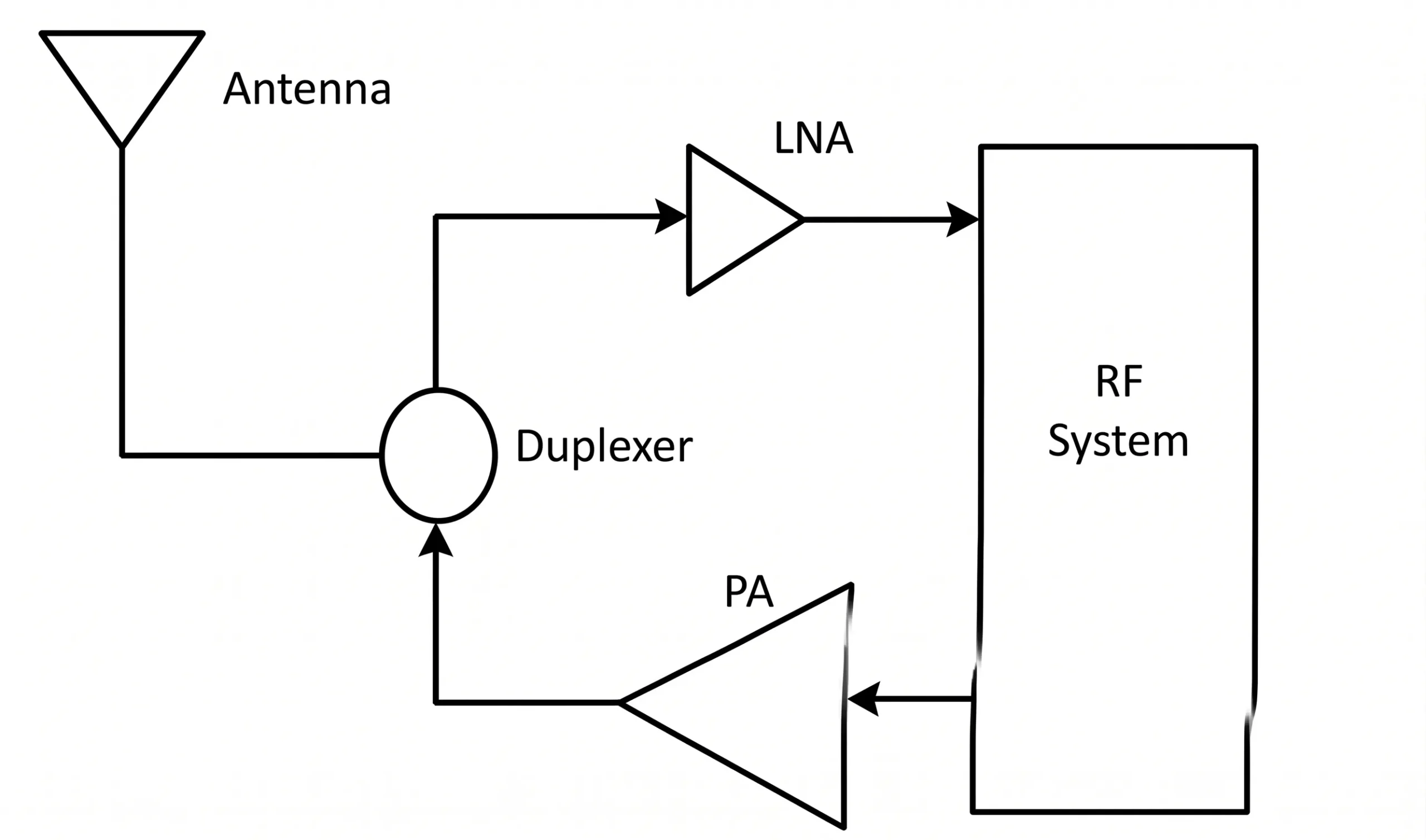
It's a question I've heard before, even from my own sales team. They'll ask, "It's an amplifier, and the gain is there, so why not?" I always tell them the same thing: it would be a disaster. The tiny, precious signal you're trying to receive would be completely lost in a sea of noise. Once that happens, no amount of digital signal processing can save it. Let's break down why these two types of amplifiers are fundamentally different and serve opposite roles in a system.
Why Does a Power Amp Have Such a High Noise Figure?
Your power amp gives you a huge signal boost. But placing it at the front of a receiver adds so much unwanted noise. This noise makes your receiver deaf.
A power amplifier is engineered for maximum power output and efficiency, not for low noise operation. Its internal components are set up to handle large signals, a process that naturally creates a lot of internal electronic noise, leading to a high noise figure (NF).
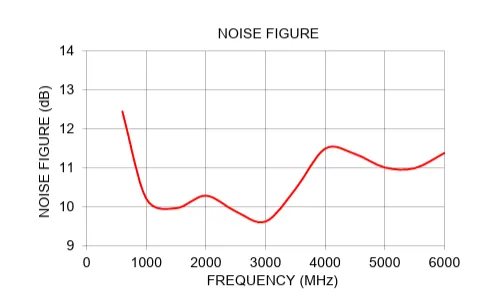
When I think about this, I see a clear design trade-off. You can't have it all in one device. An amplifier is either optimized for power or for sensitivity.
Focus on Power, Not Purity
A power amplifier's main job is to take a signal and make it as powerful as possible for transmission. To do this efficiently, its transistors are often operated in non-linear modes2. This approach saves power and reduces heat, but it is also very noisy. It's like a megaphone. A megaphone makes your voice very loud, but it also adds distortion and hiss. You wouldn't use a megaphone to try and listen for a faint sound.
The Critical Role of Noise Figure
The key specification here is the Noise Figure, or NF. Noise Figure tells you exactly how much noise an amplifier adds to the signal passing through it3. A perfect, noiseless amplifier would have an NF of 0 dB. In the real world, a power amplifier might have an NF of 10 dB or even higher4. A preamplifier, specifically a Low-Noise Amplifier (LNA), is designed for the opposite goal. At Safari Microwave, our LNAs can achieve a noise figure as low as 0.5 dB, which is essential for hearing the weakest signals.
Here is a simple table to show the difference:
| Paràmetre | Power Amplifier (PA) | Low-Noise Amplifier (LNA) / Preamp |
|---|---|---|
| cURL Too many subrequests by single Worker invocation. To configure this limit, refer to https://developers.cloudflare.com/workers/wrangler/configuration/#limits | Maximize Output Power | Minimize Added Noise |
| Figuera de Soroll (NF) | High (e.g., >10 dB) | Very Low (e.g., <1 dB) |
| Design Focus | Efficiency and Power Handling | Signal-to-Noise Ratio (SNR) Preservation |
| Analogy | Megaphone (for shouting) | Stethoscope (for listening) |
How Does a High Noise Figure Affect the Whole System?
You placed a noisy amplifier at the start of your receiver. Now, your entire system's performance has collapsed. Your sensitivity is gone.
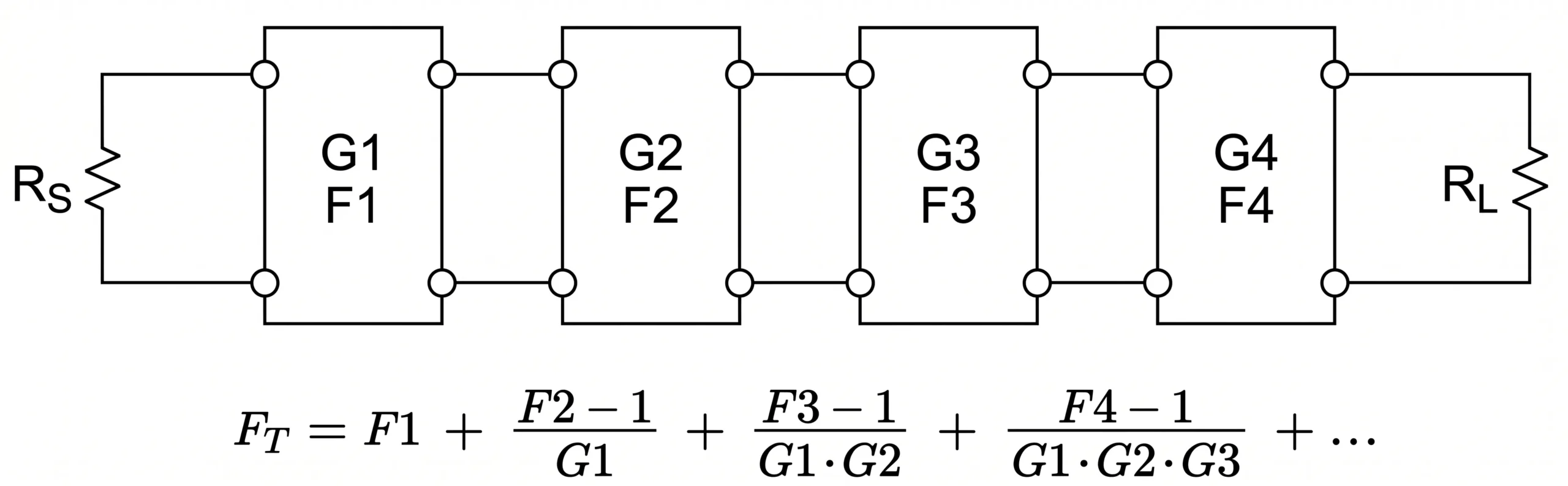
The overall noise performance of a receiver system is almost entirely determined by the noise figure of the very first amplifier in the chain. This is explained by the Friis formula for cascaded noise figure5. The noise from later stages gets divided by the gain of the stages before it.
cURL Too many subrequests by single Worker invocation. To configure this limit, refer to https://developers.cloudflare.com/workers/wrangler/configuration/#limits.
cURL Too many subrequests by single Worker invocation. To configure this limit, refer to https://developers.cloudflare.com/workers/wrangler/configuration/#limits
cURL Too many subrequests by single Worker invocation. To configure this limit, refer to https://developers.cloudflare.com/workers/wrangler/configuration/#limits.
cURL Too many subrequests by single Worker invocation. To configure this limit, refer to https://developers.cloudflare.com/workers/wrangler/configuration/#limits.
cURL Too many subrequests by single Worker invocation. To configure this limit, refer to https://developers.cloudflare.com/workers/wrangler/configuration/#limits
cURL Too many subrequests by single Worker invocation. To configure this limit, refer to https://developers.cloudflare.com/workers/wrangler/configuration/#limits.
cURL Too many subrequests by single Worker invocation. To configure this limit, refer to https://developers.cloudflare.com/workers/wrangler/configuration/#limits
| cURL Too many subrequests by single Worker invocation. To configure this limit, refer to https://developers.cloudflare.com/workers/wrangler/configuration/#limits | cURL Too many subrequests by single Worker invocation. To configure this limit, refer to https://developers.cloudflare.com/workers/wrangler/configuration/#limits | cURL Too many subrequests by single Worker invocation. To configure this limit, refer to https://developers.cloudflare.com/workers/wrangler/configuration/#limits | cURL Too many subrequests by single Worker invocation. To configure this limit, refer to https://developers.cloudflare.com/workers/wrangler/configuration/#limits | cURL Too many subrequests by single Worker invocation. To configure this limit, refer to https://developers.cloudflare.com/workers/wrangler/configuration/#limits |
|---|---|---|---|---|
| cURL Too many subrequests by single Worker invocation. To configure this limit, refer to https://developers.cloudflare.com/workers/wrangler/configuration/#limits | cURL Too many subrequests by single Worker invocation. To configure this limit, refer to https://developers.cloudflare.com/workers/wrangler/configuration/#limits | cURL Too many subrequests by single Worker invocation. To configure this limit, refer to https://developers.cloudflare.com/workers/wrangler/configuration/#limits | cURL Too many subrequests by single Worker invocation. To configure this limit, refer to https://developers.cloudflare.com/workers/wrangler/configuration/#limits | cURL Too many subrequests by single Worker invocation. To configure this limit, refer to https://developers.cloudflare.com/workers/wrangler/configuration/#limits |
| cURL Too many subrequests by single Worker invocation. To configure this limit, refer to https://developers.cloudflare.com/workers/wrangler/configuration/#limits | cURL Too many subrequests by single Worker invocation. To configure this limit, refer to https://developers.cloudflare.com/workers/wrangler/configuration/#limits | cURL Too many subrequests by single Worker invocation. To configure this limit, refer to https://developers.cloudflare.com/workers/wrangler/configuration/#limits | cURL Too many subrequests by single Worker invocation. To configure this limit, refer to https://developers.cloudflare.com/workers/wrangler/configuration/#limits | cURL Too many subrequests by single Worker invocation. To configure this limit, refer to https://developers.cloudflare.com/workers/wrangler/configuration/#limits |
cURL Too many subrequests by single Worker invocation. To configure this limit, refer to https://developers.cloudflare.com/workers/wrangler/configuration/#limits.
Conclusió
cURL Too many subrequests by single Worker invocation. To configure this limit, refer to https://developers.cloudflare.com/workers/wrangler/configuration/#limits.
"cURL Too many subrequests by single Worker invocation. To configure this limit, refer to https://developers.cloudflare.com/workers/wrangler/configuration/#limits. ↩
"Nonlinear Analysis of Power Amplifiers - Microwave Journal", https://www.microwavejournal.com/articles/5308-nonlinear-analysis-of-power-amplifiers. A source can describe the various classes of power amplifier operation (e.g., Class A, B, AB, C), explaining that more efficient classes often operate in non-linear or switching modes, which contrasts with the linear operation required for low-noise applications. Evidence role: mechanism; source type: encyclopedia. Supports: The claim that power amplifier transistors are operated in non-linear modes for efficiency.. ↩
"Noise figure - Wikipedia", https://en.wikipedia.org/wiki/Noise_figure. A source from a textbook or technical encyclopedia can provide a formal definition of Noise Figure (NF) as a measure of the degradation in the signal-to-noise ratio (SNR) caused by a component in a radio frequency system. Evidence role: definition; source type: education. Supports: The definition of Noise Figure.. ↩
"A Guide for Choosing the Right RF Amplifier for Your Application", https://www.analog.com/en/resources/analog-dialogue/raqs/raq-issue-195.html. A source, such as a survey of component datasheets or a textbook on RF design, can provide examples of typical noise figures for power amplifiers, showing that values of 10 dB or higher are common. Evidence role: statistic; source type: research. Supports: The claim that power amplifiers can have a noise figure of 10 dB or more.. Scope note: The exact value can vary significantly based on the amplifier's class, frequency, and power level. ↩
"Friis formulas for noise - Wikipedia", https://en.wikipedia.org/wiki/Friis_formulas_for_noise. A source can present the Friis formula for noise factor and explain its use in calculating the total noise performance of a series of cascaded electronic components, such as amplifiers and mixers in a receiver chain. Evidence role: definition; source type: encyclopedia. Supports: The Friis formula for cascaded noise figure.. ↩

 Catalan
  English
  Spanish (Spain)
  Arabic
  French (France)
  Vietnamese
  Indonesian
  Belarusian
  Moroccan Arabic
  Tibetan
  Danish
  Bulgarian
  Bosnian
  Frisian
  Japanese
  Bashkir
  Cebuano
  French (Belgium)
  Estonian
  Hindi
Hindi  Kurdish
  Tahitian
  Spanish (Colombia)
  Croatian
  Breton
  Georgian