
Facing pressure to cut component costs? A cheap LNB seems like an easy win, but its failure can cause system downtime and expensive field repairs, erasing any initial savings.
To balance cost and performance, look beyond the initial price of the LNB. The best approach is to evaluate its Total Cost of Ownership1. Prioritize reliability by verifying surge test data, temperature cycling reports, and the presence of internal physical protection components to ensure long-term stability.
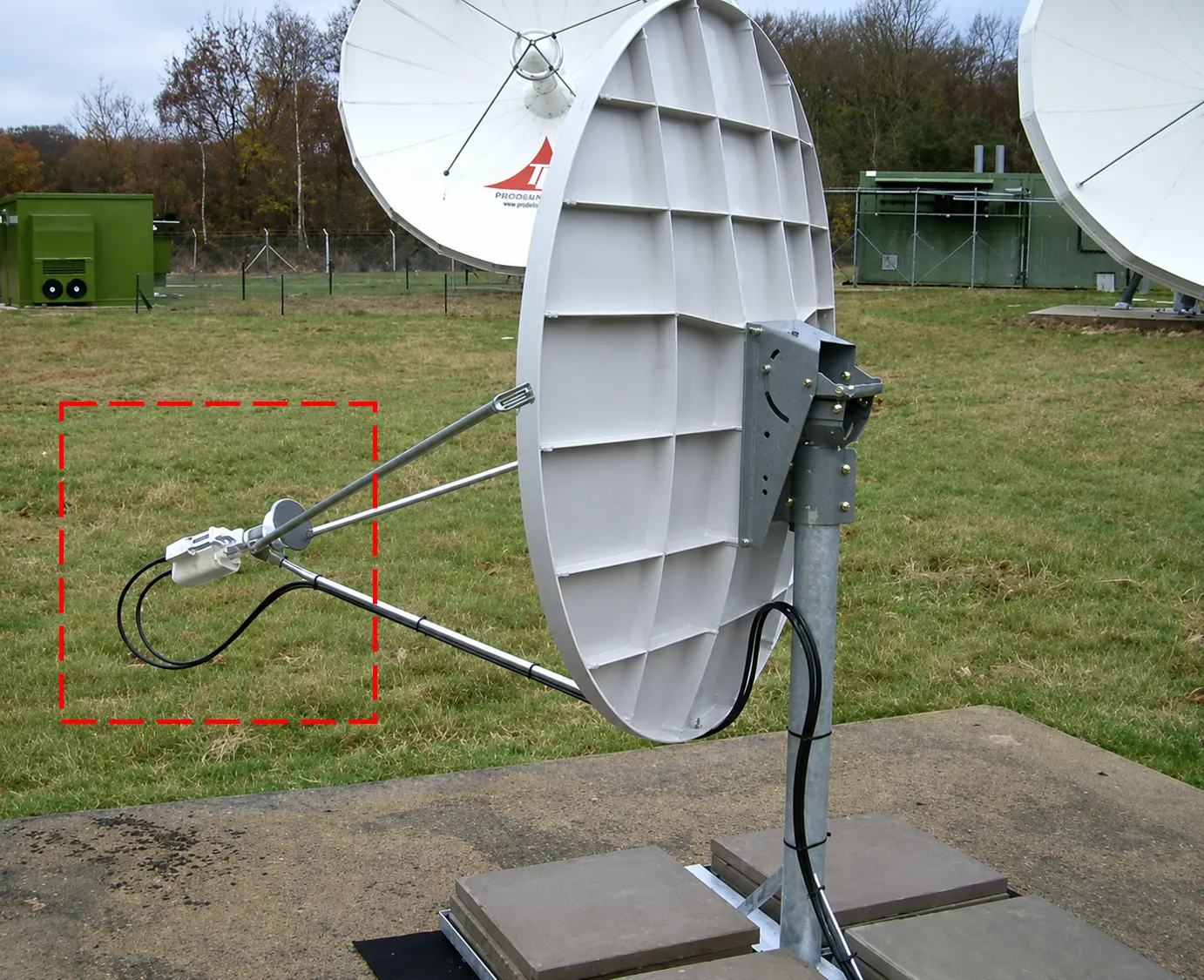
It’s easy to get caught up in the numbers on a price sheet. I’ve been in many meetings where the primary focus is shaving a few dollars off the bill of materials. But I've learned from experience that for critical components like a VSAT LNB, the upfront cost is only a small part of the story. The real cost emerges over the system's entire lifecycle, especially when it's deployed in a remote or harsh environment. Let's break down what really matters when you're making this critical choice.
Is Your LNB Built to Last, or Just to Sell?
You found an LNB with the right specs at a great price. But what happens if a power surge or static discharge takes your entire system offline2? Verifying its physical protection is key.
A truly robust LNB includes physical protection components for ESD and power surges. Always request surge test data from the supplier and, if possible, inspect a sample internally. This simple check ensures the LNB can survive real-world electrical events, preventing costly failures and system downtime.

When a client questions the cost of a high-quality LNB, I often tell them this story. A few years ago, a team I was consulting for chose a cheaper LNB to save about 20% on their budget. The specs looked identical. Six months later, a regional power fluctuation caused a surge that fried over 30% of their deployed units. The cost of sending technicians out for replacement and the system downtime completely wiped out their initial savings, and then some.
This is why I'm so strict about checking for physical protection. It’s not just about the spec sheet. I always ask for a sample unit to take apart. I want to see with my own eyes if there are physical isolation components and dedicated protection circuits on the board. I also demand to see the surge test data. A reputable manufacturer like us at Safari Microwave will have this information ready because we know how critical it is. We design our components for reliability, not just to win a price war.
Here’s a simple breakdown of what to look for:
| विशेषता | Low-Cost LNB | Reliable LNB |
|---|---|---|
| ESD Protection | Minimal or none listed | Includes dedicated protection circuits |
| Surge Protection | No test data provided | Passes industry-standard tests |
| Internal Build | No visible isolation components | Physical isolation, quality soldering |
| Long-Term Cost | High (due to replacement & downtime) | Low (due to stable, long-term operation) |
How Do You Ensure Your LNB Performs in Extreme Conditions?
Your VSAT system needs to work flawlessly everywhere, from hot deserts to cold arctic regions. But temperature swings can cause performance drift3, leading to signal loss and unreliable service.
To guarantee performance stability across all environments, you must check the LNB's environmental test data. Ask the supplier for their high and low-temperature cycling reports4, as well as mechanical vibration and stress test results. This documentation is your proof that the LNB will maintain its RF performance reliably.
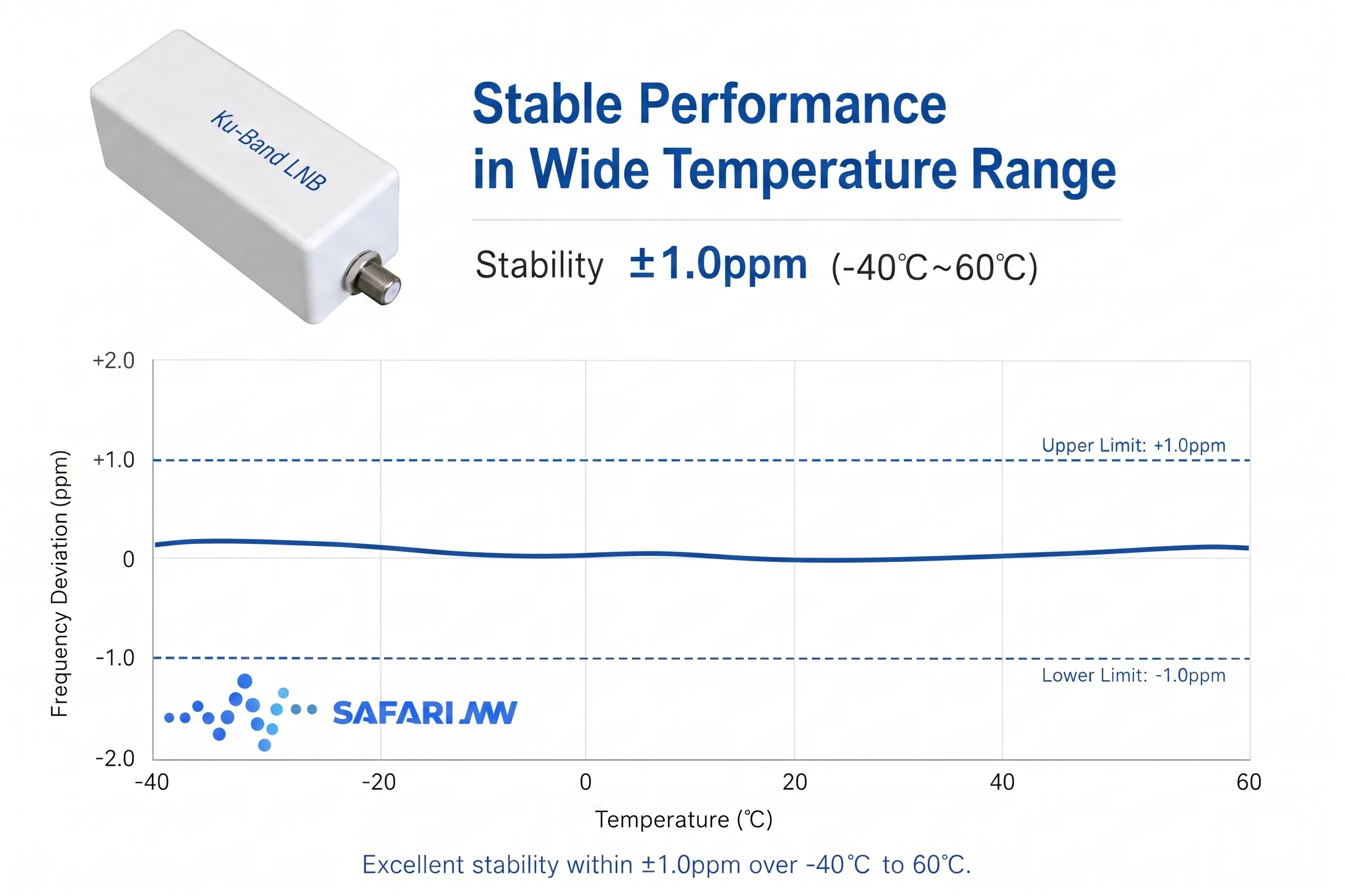
The RF performance numbers on a datasheet are almost always measured at room temperature, around 25°C. But a VSAT terminal is never operating in such a perfect environment. It's bolted to a dish, exposed to direct sunlight, freezing rain, and constant vibration from wind5. These factors can cause the LNB's performance to drift significantly if it's not designed to handle them. For example, a change in temperature can affect the gain and noise figure, potentially disrupting the entire communication link.
cURL Too many subrequests by single Worker invocation. To configure this limit, refer to https://developers.cloudflare.com/workers/wrangler/configuration/#limits.
cURL Too many subrequests by single Worker invocation. To configure this limit, refer to https://developers.cloudflare.com/workers/wrangler/configuration/#limits
cURL Too many subrequests by single Worker invocation. To configure this limit, refer to https://developers.cloudflare.com/workers/wrangler/configuration/#limits cURL Too many subrequests by single Worker invocation. To configure this limit, refer to https://developers.cloudflare.com/workers/wrangler/configuration/#limits6 cURL Too many subrequests by single Worker invocation. To configure this limit, refer to https://developers.cloudflare.com/workers/wrangler/configuration/#limits.
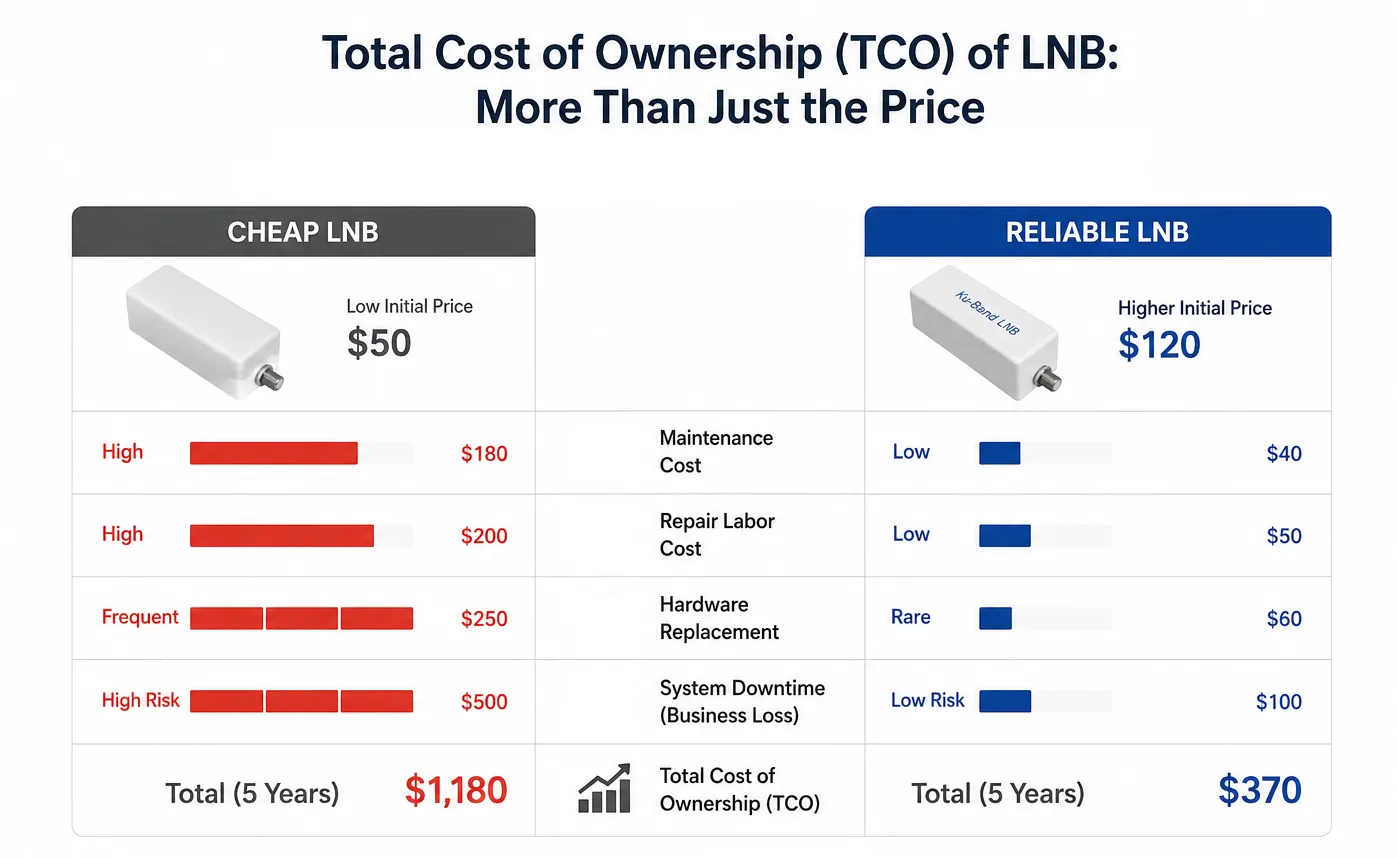
How Do You Calculate the True Cost of a VSAT LNB?
cURL Too many subrequests by single Worker invocation. To configure this limit, refer to https://developers.cloudflare.com/workers/wrangler/configuration/#limits.
cURL Too many subrequests by single Worker invocation. To configure this limit, refer to https://developers.cloudflare.com/workers/wrangler/configuration/#limits.
cURL Too many subrequests by single Worker invocation. To configure this limit, refer to https://developers.cloudflare.com/workers/wrangler/configuration/#limits.
cURL Too many subrequests by single Worker invocation. To configure this limit, refer to https://developers.cloudflare.com/workers/wrangler/configuration/#limits
cURL Too many subrequests by single Worker invocation. To configure this limit, refer to https://developers.cloudflare.com/workers/wrangler/configuration/#limits.
| cURL Too many subrequests by single Worker invocation. To configure this limit, refer to https://developers.cloudflare.com/workers/wrangler/configuration/#limits | cURL Too many subrequests by single Worker invocation. To configure this limit, refer to https://developers.cloudflare.com/workers/wrangler/configuration/#limits | cURL Too many subrequests by single Worker invocation. To configure this limit, refer to https://developers.cloudflare.com/workers/wrangler/configuration/#limits |
|---|---|---|
| cURL Too many subrequests by single Worker invocation. To configure this limit, refer to https://developers.cloudflare.com/workers/wrangler/configuration/#limits | $50 | $80 |
| cURL Too many subrequests by single Worker invocation. To configure this limit, refer to https://developers.cloudflare.com/workers/wrangler/configuration/#limits | cURL Too many subrequests by single Worker invocation. To configure this limit, refer to https://developers.cloudflare.com/workers/wrangler/configuration/#limits | cURL Too many subrequests by single Worker invocation. To configure this limit, refer to https://developers.cloudflare.com/workers/wrangler/configuration/#limits |
| cURL Too many subrequests by single Worker invocation. To configure this limit, refer to https://developers.cloudflare.com/workers/wrangler/configuration/#limits | $1,500 | $1,500 |
| cURL Too many subrequests by single Worker invocation. To configure this limit, refer to https://developers.cloudflare.com/workers/wrangler/configuration/#limits | *$50 + (0.20 $1,500) = $350** | *$80 + (0.02 $1,500) = $110** |
cURL Too many subrequests by single Worker invocation. To configure this limit, refer to https://developers.cloudflare.com/workers/wrangler/configuration/#limits.
निष्कर्ष
cURL Too many subrequests by single Worker invocation. To configure this limit, refer to https://developers.cloudflare.com/workers/wrangler/configuration/#limits.
"cURL Too many subrequests by single Worker invocation. To configure this limit, refer to https://developers.cloudflare.com/workers/wrangler/configuration/#limits. ↩
"What You Need to Know About ESD and RF Devices (Part 1 of 3)", https://www.qorvo.com/design-hub/blog/get-grounded-what-you-need-to-know-about-esd-and-rf-devices. Explains the physical mechanisms by which electrical overstress (EOS) and electrostatic discharge (ESD) can damage or destroy semiconductor devices by causing thermal damage to junctions or dielectric breakdown, leading to component failure. Evidence role: mechanism; source type: paper. Supports: That power surges (electrical overstress) and electrostatic discharge (ESD) can cause catastrophic failure or latent damage in the semiconductor devices found within an LNB.. Scope note: The source may discuss general electronics rather than LNBs specifically, but the physical principles of failure are directly applicable. ↩
"[PDF] Understanding Thermal Analysis of RF Devices - APPLICATION NOTE", https://www.qorvo.com/resources/d/understanding-thermal-analysis-of-rf-devices-application-note. Explains how temperature variations alter the physical properties of semiconductor materials, causing changes in key performance parameters of RF amplifiers, such as gain, noise figure, and linearity. Evidence role: mechanism; source type: paper. Supports: That variations in ambient temperature directly affect the performance characteristics of RF components, such as the gain and noise figure of an LNB.. Scope note: The source will likely be technical and may not specifically mention LNBs, but the principles apply to the core amplifier components within them. ↩
"[PDF] Early Environmental Screening of Spacecraft Electronic Units using ...", https://s3vi.ndc.nasa.gov/ssri-kb/static/resources/ICES_2015_submission_8.pdf. Describes standardized test methods for temperature cycling, such as those found in MIL-STD-810 or JEDEC JESD22-A104, which are used to determine the ability of components to withstand repeated exposure to extreme temperatures and to identify potential failure modes. Evidence role: definition; source type: government. Supports: That temperature cycling is a standardized environmental stress test used to evaluate the reliability of electronic components.. ↩
"[PDF] Mechanical Vibrations, its Effect on Assembly", https://www.electronics.org/system/files/technical_resource/E14%26S04-05.pdf. Details the failure mechanisms in electronic assemblies subjected to mechanical vibration, including solder joint fatigue and component lead fracture, which can result in degraded performance or complete failure over time. Evidence role: mechanism; source type: paper. Supports: That sustained mechanical vibration, such as that caused by wind acting on a satellite dish, can lead to fatigue in solder joints and other interconnects, potentially causing intermittent or permanent electronic failure.. Scope note: The source would discuss general principles of electronics reliability, which are applicable to an LNB mounted on an outdoor antenna. ↩
"When To Perform a 100% Quality Control Inspection vs. AQL Sampling", https://www.intouch-quality.com/blog/when-to-perform-a-100-quality-control-inspection-vs.-aql-sampling. Discusses the 'bathtub curve' of electronic component failure rates, explaining that 100% testing or burn-in procedures are employed to screen for early-life failures (infant mortality) and improve the reliability of the deployed product population. Evidence role: general_support; source type: paper. Supports: That 100% testing, often as part of an environmental stress screening (ESS) or burn-in process, is a strategy used to identify and eliminate 'infant mortality' failures in electronic components intended for high-reliability applications.. Scope note: The source would explain the theory and application of this testing strategy, not mandate it as 'non-negotiable' for all cases, but it would support its importance for critical systems. ↩

 Hindi
Hindi  English
  Spanish
  French
  Japanese
  Arabic
  Vietnamese
  Indonesian
  Danish
  Bulgarian