
Choosing the right power amplifier is a critical decision. You need raw power, but a distorted signal can ruin your entire system. The right choice balances both needs perfectly.
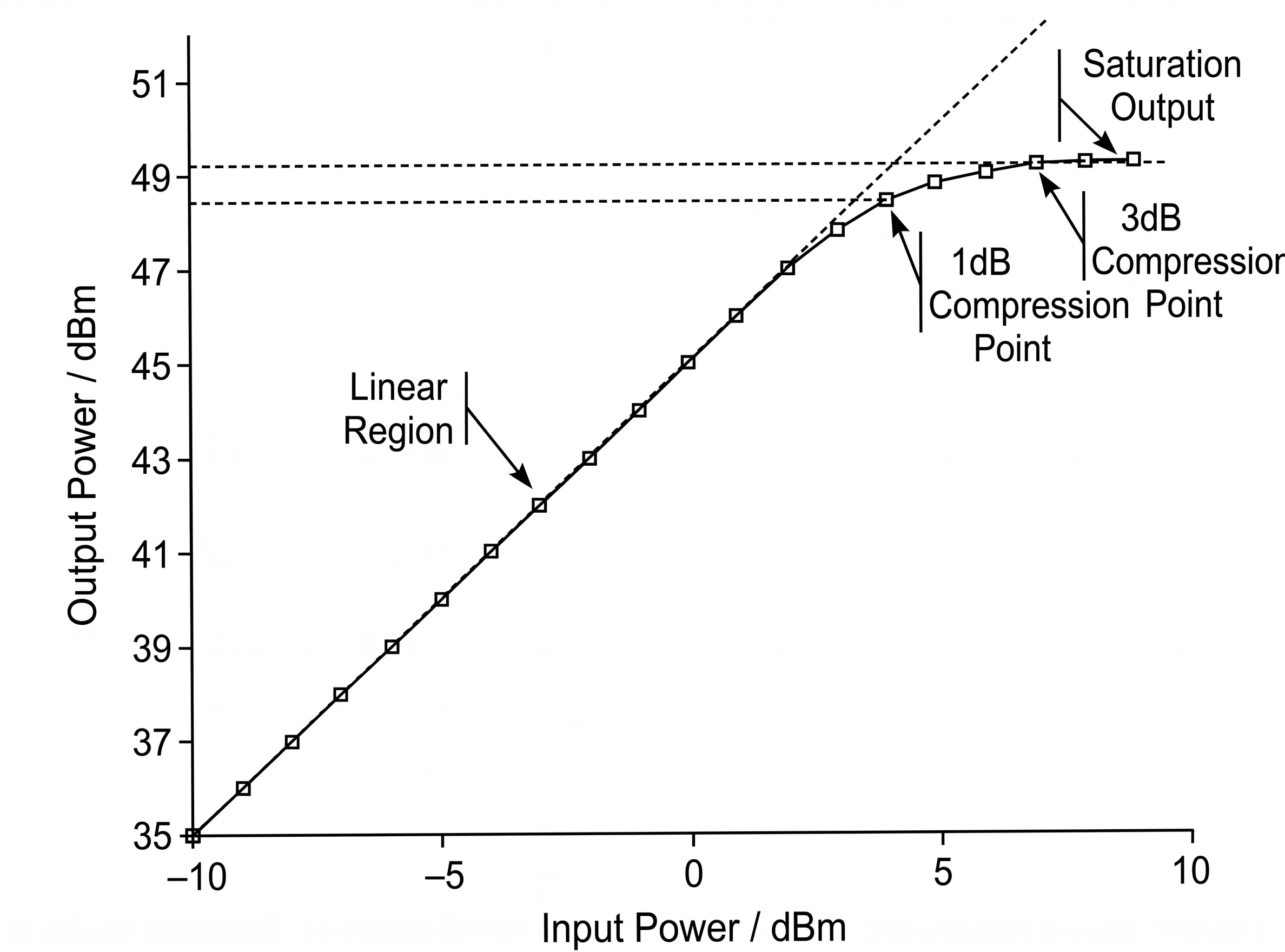
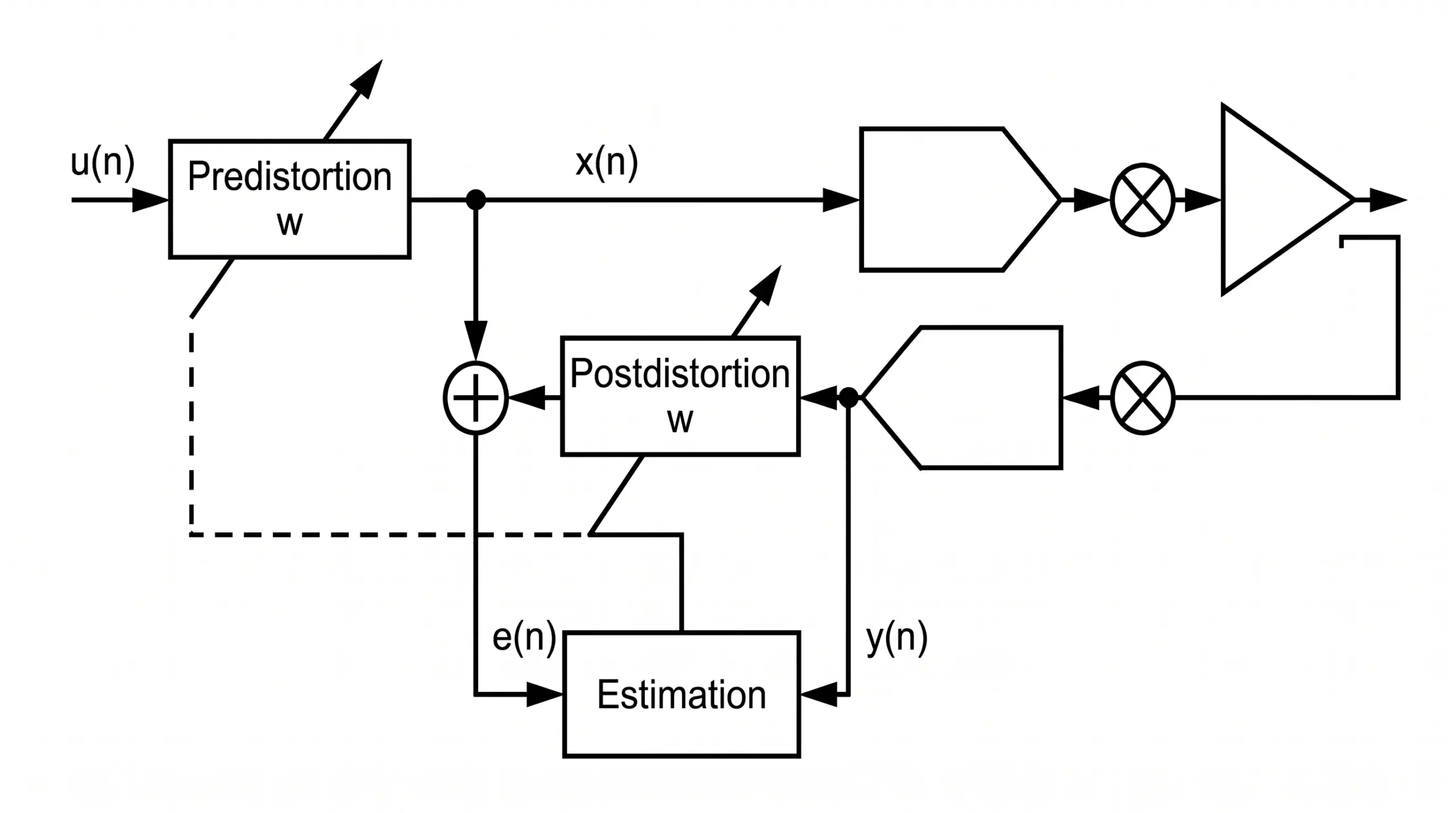
Solid-State Power Amplifiers (SSPAs) ensure linearity by using advanced semiconductor materials like Gallium Nitride (GaN) which have a wider linear operating range1. They also employ active linearization techniques, such as digital predistortion, to mathematically cancel out non-linear behavior2 before the signal is even amplified.
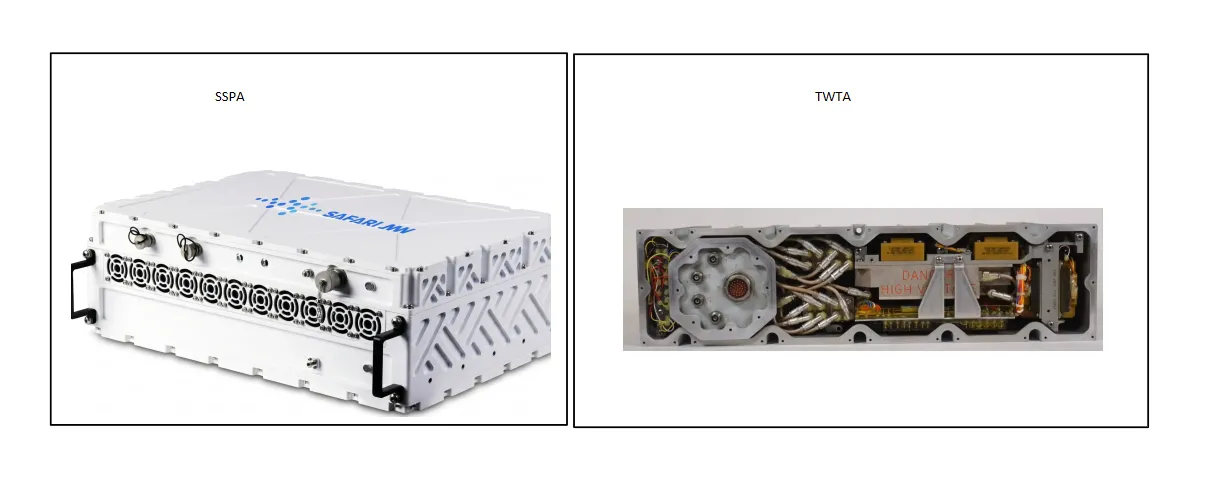
I remember a tense discussion I had on a Ku-band satellite project. A very experienced senior engineer was set on using a traditional Traveling Wave Tube Amplifier (TWTA). He argued for its incredible 60% efficiency3, and on paper, he was right. But the numbers on a datasheet don't always tell the whole story. I had to point to a single, critical client requirement that changed everything. That experience taught me a valuable lesson about the real-world trade-offs between efficiency and linearity, a lesson that is essential for anyone designing a modern RF system.
Why Choose an SSPA Over a TWTA for Linearity?
TWTAs look impressive with their high peak efficiency numbers. But these figures can be misleading when your application demands a clean, linear signal, forcing you into massive performance compromises.
SSPAs are often chosen over TWTAs for linearity-critical applications4 because they have an inherently wider linear operating range. This means they require significantly less power back-off to achieve low signal distortion (like a low EVM), making them more efficient and reliable in real-world linear operations.
The key requirement I mentioned on that satellite project was an Error Vector Magnitude (EVM) of 4%. EVM is a direct measure of signal quality5; a lower number means a cleaner, more linear signal. The senior engineer’s favored TWTA, while efficient at saturation, is notoriously non-linear. To get that signal clean enough to hit a 4% EVM, we would have to back the power off by 7 or even 8 dB6. This move would completely destroy its efficiency advantage and create a new problem: massive heat dissipation. In contrast, a modern GaN SSPA has a much more forgiving linear region. To meet the same EVM target, a GaN SSPA only needs a 3-4 dB back-off7.
Let's look at a simple comparison for that project:
| Parametar | Traditional TWTA | GaN SSPA |
|---|---|---|
| Saturated Efficiency | ~60% | ~50% |
| Required EVM | < 4% | < 4% |
| Required Back-off | 7-8 dB | 3-4 dB |
| Effective Efficiency | Very Low | Moderately High |
| Thermal Management | Difficult | Manageable |
When you factor in the required back-off, the GaN SSPA was the more efficient and practical choice. This proves that you can't just look at the headline efficiency number. You must consider the linearity requirements of your specific application.
What Techniques Make SSPAs So Linear?
You know that SSPAs deliver better linearity for demanding jobs. But without knowing how they achieve this performance, you can't confidently choose the right amplifier or understand its limits.
cURL Too many subrequests by single Worker invocation. To configure this limit, refer to https://developers.cloudflare.com/workers/wrangler/configuration/#limits.
cURL Too many subrequests by single Worker invocation. To configure this limit, refer to https://developers.cloudflare.com/workers/wrangler/configuration/#limits.
cURL Too many subrequests by single Worker invocation. To configure this limit, refer to https://developers.cloudflare.com/workers/wrangler/configuration/#limits
cURL Too many subrequests by single Worker invocation. To configure this limit, refer to https://developers.cloudflare.com/workers/wrangler/configuration/#limits, cURL Too many subrequests by single Worker invocation. To configure this limit, refer to https://developers.cloudflare.com/workers/wrangler/configuration/#limits8. cURL Too many subrequests by single Worker invocation. To configure this limit, refer to https://developers.cloudflare.com/workers/wrangler/configuration/#limits cURL Too many subrequests by single Worker invocation. To configure this limit, refer to https://developers.cloudflare.com/workers/wrangler/configuration/#limits9 cURL Too many subrequests by single Worker invocation. To configure this limit, refer to https://developers.cloudflare.com/workers/wrangler/configuration/#limits.
cURL Too many subrequests by single Worker invocation. To configure this limit, refer to https://developers.cloudflare.com/workers/wrangler/configuration/#limits
cURL Too many subrequests by single Worker invocation. To configure this limit, refer to https://developers.cloudflare.com/workers/wrangler/configuration/#limits.
How Do You Select an SSPA Based on Linearity Requirements?
cURL Too many subrequests by single Worker invocation. To configure this limit, refer to https://developers.cloudflare.com/workers/wrangler/configuration/#limits
cURL Too many subrequests by single Worker invocation. To configure this limit, refer to https://developers.cloudflare.com/workers/wrangler/configuration/#limits cURL Too many subrequests by single Worker invocation. To configure this limit, refer to https://developers.cloudflare.com/workers/wrangler/configuration/#limits10. cURL Too many subrequests by single Worker invocation. To configure this limit, refer to https://developers.cloudflare.com/workers/wrangler/configuration/#limits.
cURL Too many subrequests by single Worker invocation. To configure this limit, refer to https://developers.cloudflare.com/workers/wrangler/configuration/#limits.
cURL Too many subrequests by single Worker invocation. To configure this limit, refer to https://developers.cloudflare.com/workers/wrangler/configuration/#limits
- cURL Too many subrequests by single Worker invocation. To configure this limit, refer to https://developers.cloudflare.com/workers/wrangler/configuration/#limits11: cURL Too many subrequests by single Worker invocation. To configure this limit, refer to https://developers.cloudflare.com/workers/wrangler/configuration/#limits.
- cURL Too many subrequests by single Worker invocation. To configure this limit, refer to https://developers.cloudflare.com/workers/wrangler/configuration/#limits cURL Too many subrequests by single Worker invocation. To configure this limit, refer to https://developers.cloudflare.com/workers/wrangler/configuration/#limits.
cURL Too many subrequests by single Worker invocation. To configure this limit, refer to https://developers.cloudflare.com/workers/wrangler/configuration/#limits
| cURL Too many subrequests by single Worker invocation. To configure this limit, refer to https://developers.cloudflare.com/workers/wrangler/configuration/#limits | cURL Too many subrequests by single Worker invocation. To configure this limit, refer to https://developers.cloudflare.com/workers/wrangler/configuration/#limits | What to Look For |
|---|---|---|
| P1dB | The upper limit of the linear operating range. | A higher value is better. |
| OIP3 | The amplifier's resistance to creating distortion. | A higher value is better. |
| EVM / ACPR | A direct measure of signal quality at a given power. | A lower value is better. |
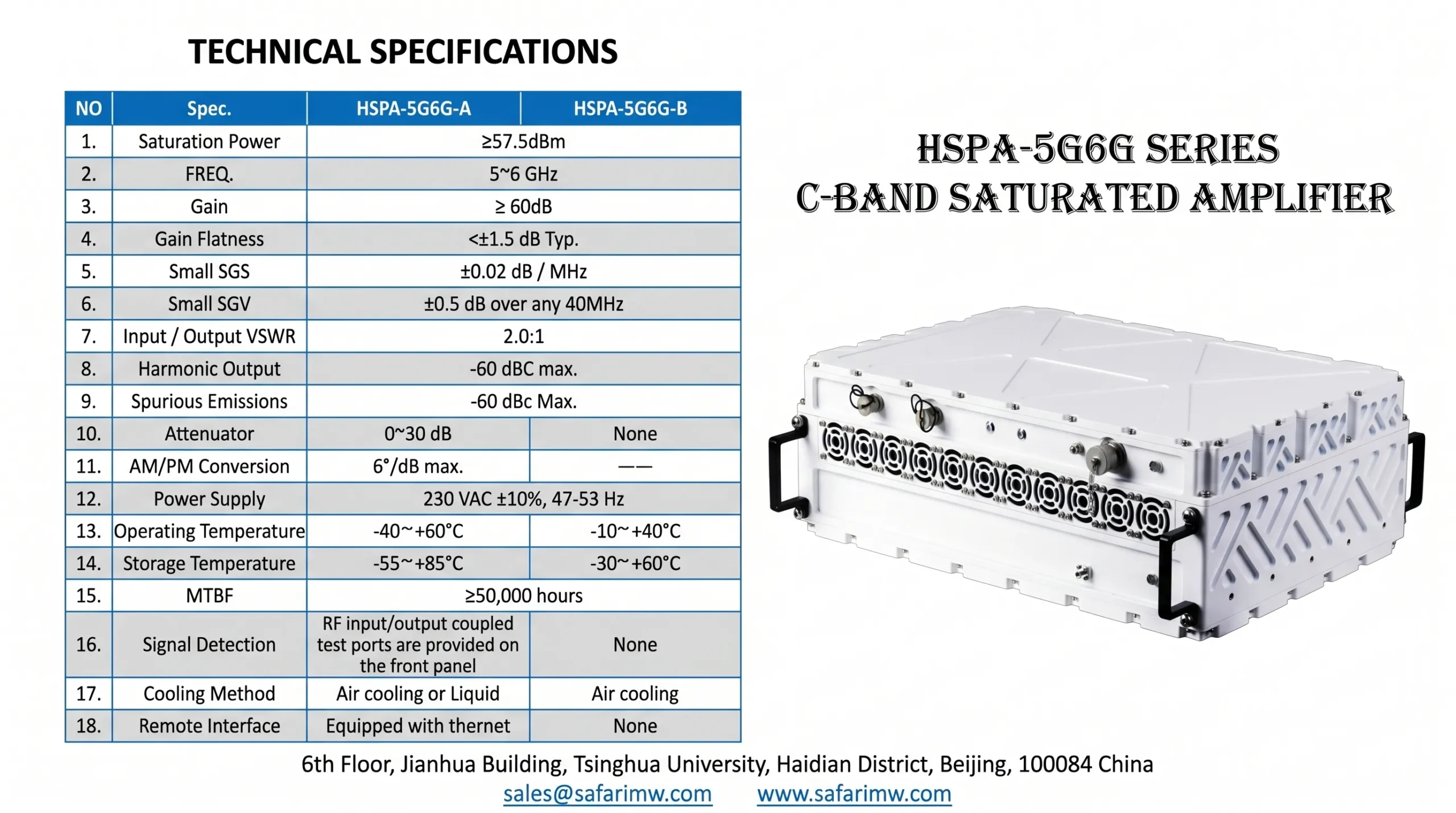
However, the best approach is direct communication. At Safari Microwave, we encourage our customers to simply tell us their system-level requirements. If you need a certain EVM at a specific output power, just ask. We have the test platforms to verify performance and provide you with data that directly matches your use case. This avoids guesswork and ensures you get a component that is 100% right for your project.
Zaključak
Choosing the right amplifier is about balancing efficiency with linearity. SSPAs, especially those using GaN technology and DPD, provide the superior linear performance required for today's complex communication systems.
"Benefits of GaN for RF Applications - Power Electronics News", https://www.powerelectronicsnews.com/benefits-of-gan-for-rf-applications/. A technical paper or educational resource can provide data on the physical properties of Gallium Nitride (GaN), such as its bandgap and electron mobility, which contribute to a wider linear operating range compared to materials like LDMOS or GaAs. Evidence role: mechanism; source type: paper. Supports: The claim that GaN as a material possesses properties that lead to a wider linear operating range in amplifiers.. ↩
"Digital Predistortion for RF Communications: From Equations to ...", https://www.analog.com/en/resources/analog-dialogue/articles/digital-predistortion-for-rf-communication.html. An educational resource or technical paper can explain the principle of digital predistortion (DPD), detailing how a model of the amplifier's distortion is used to pre-emptively alter the input signal, resulting in a more linear output. Evidence role: definition; source type: education. Supports: The claim that digital predistortion works by applying a corrective 'anti-distortion' to the input signal to cancel out the amplifier's inherent non-linearity.. ↩
"Traveling-wave tube - Wikipedia", https://en.wikipedia.org/wiki/Traveling-wave_tube. A technical review or manufacturer's datasheet collection can show that peak (saturated) efficiency ratings for modern Traveling Wave Tube Amplifiers (TWTAs) can be in the range of 60-70%, particularly for space and defense applications. Evidence role: statistic; source type: paper. Supports: The claim that TWTAs can reach efficiency levels of around 60%.. Scope note: The source would likely note that this efficiency is measured at saturation, not in the linear operating region required by many modern communication standards. ↩
"Reliability of SSPA's and TWTA's - NASA ADS", https://ui.adsabs.harvard.edu/abs/1994ITED...41..625S/abstract. An industry analysis or survey paper can compare the trade-offs between SSPAs and TWTAs, confirming that the superior inherent linearity of SSPAs makes them the preferred choice for systems with complex modulation schemes that are sensitive to distortion. Evidence role: general_support; source type: research. Supports: The claim that SSPAs are generally selected for applications demanding high linearity, while TWTAs are often chosen for applications prioritizing raw power efficiency.. ↩
"Error vector magnitude - Wikipedia", https://en.wikipedia.org/wiki/Error_vector_magnitude. A definition from a standards organization like the IEEE or a reputable electronics engineering source explains that Error Vector Magnitude (EVM) quantifies the difference between the ideal constellation points of a signal and the points actually received, serving as a comprehensive measure of signal quality. Evidence role: definition; source type: institution. Supports: The definition of EVM and its role as a metric for signal quality in digital communication systems.. ↩
"(PDF) Accurate Characterization of TWTA Distortion in Multicarrier ...", https://www.academia.edu/55267491/Accurate_Characterization_of_TWTA_Distortion_in_Multicarrier_Operation_by_Means_of_a_Correlation_Based_Method. A research paper or application note can provide data or a graph showing the relationship between power back-off and linearity (measured by EVM or ACPR) for a typical TWTA, corroborating that a back-off of 6-10 dB is often necessary to meet the stringent linearity requirements of modern digital modulation schemes. Evidence role: statistic; source type: paper. Supports: The claim that TWTAs require significant power back-off, on the order of 7-8 dB, to operate in a highly linear region.. Scope note: The exact back-off value depends on the specific TWTA model and the modulation scheme used. ↩
"Linearity Enhancement of High Power GaN HEMT Amplifier Circuits", https://vtechworks.lib.vt.edu/items/6ed25e83-85b5-4101-aae8-ddf7137ac749. A technical paper or manufacturer's application note can demonstrate the relationship between power back-off and EVM for a GaN SSPA, showing that a back-off in the 3-5 dB range is often sufficient to achieve high linearity, thus preserving more of the amplifier's peak efficiency. Evidence role: statistic; source type: paper. Supports: The claim that GaN SSPAs require significantly less power back-off (e.g., 3-4 dB) than TWTAs to achieve high linearity.. Scope note: The specific back-off required can vary based on the amplifier design and the specific linearity target. ↩
"The Studies on Gallium Nitride-Based Materials: A Bibliometric ...", https://pmc.ncbi.nlm.nih.gov/articles/PMC9822161/. A materials science textbook or university educational resource can provide a comparative table of semiconductor properties, confirming that Gallium Nitride (GaN) has a significantly wider bandgap (~3.4 eV) and higher electron mobility than Silicon-based LDMOS or Gallium Arsenide (GaAs). Evidence role: general_support; source type: education. Supports: The claim that GaN has a wider bandgap and higher electron mobility compared to LDMOS and GaAs.. ↩
"Wide-bandgap semiconductor - Wikipedia", https://en.wikipedia.org/wiki/Wide-bandgap_semiconductor. A technical review paper can explain how the fundamental properties of GaN translate into practical advantages: its wide bandgap allows for higher breakdown voltages and operating temperatures, leading to higher power density, while its high electron mobility contributes to better high-frequency performance and linearity. Evidence role: mechanism; source type: paper. Supports: The claim that GaN's physical properties lead to higher power density and better linearity.. ↩
"Third-order intercept point - Wikipedia", https://en.wikipedia.org/wiki/Third-order_intercept_point. A technical article or educational resource defines the Output Third-Order Intercept Point (OIP3) as a theoretical point on the amplifier's transfer curve where the power of the fundamental signal and the third-order distortion products would be equal, serving as a key metric for linearity. Evidence role: definition; source type: education. Supports: The definition of OIP3 and its connection to third-order intermodulation distortion.. ↩
"Compression point - Wikipedia", https://en.wikipedia.org/wiki/Compression_point. An engineering encyclopedia or textbook defines the 1 dB compression point (P1dB) as the output power at which the amplifier's actual gain is 1 dB less than its small-signal gain, commonly used to mark the upper limit of its linear operating region. Evidence role: definition; source type: encyclopedia. Supports: The definition of the 1 dB compression point (P1dB) and its significance.. ↩

 Bosnian
  English
  Spanish (Spain)
  Arabic
  French (France)
  Vietnamese
  Indonesian
  Belarusian
  Moroccan Arabic
  Tibetan
  Danish
  Bulgarian
  Catalan
  Frisian
  Japanese
  Bashkir
  Cebuano
  French (Belgium)
  Estonian
  Hindi
Hindi  Kurdish
  Tahitian
  Spanish (Colombia)
  Croatian
  Breton
  Georgian