
Heavy rain disrupts satellite links, leading to data loss and downtime. Advanced RF solutions, however, are engineered to maintain a highly stable connection even in severe weather, minimizing disruptions and maximizing uptime.
To overcome rain fade, you must combine a sufficient power margin with dynamic techniques. The best approach uses Uplink Power Control (UPC)1 to boost signal strength and Adaptive Coding and Modulation (ACM)2 to make the signal more robust, ensuring the link remains active during heavy rainfall.
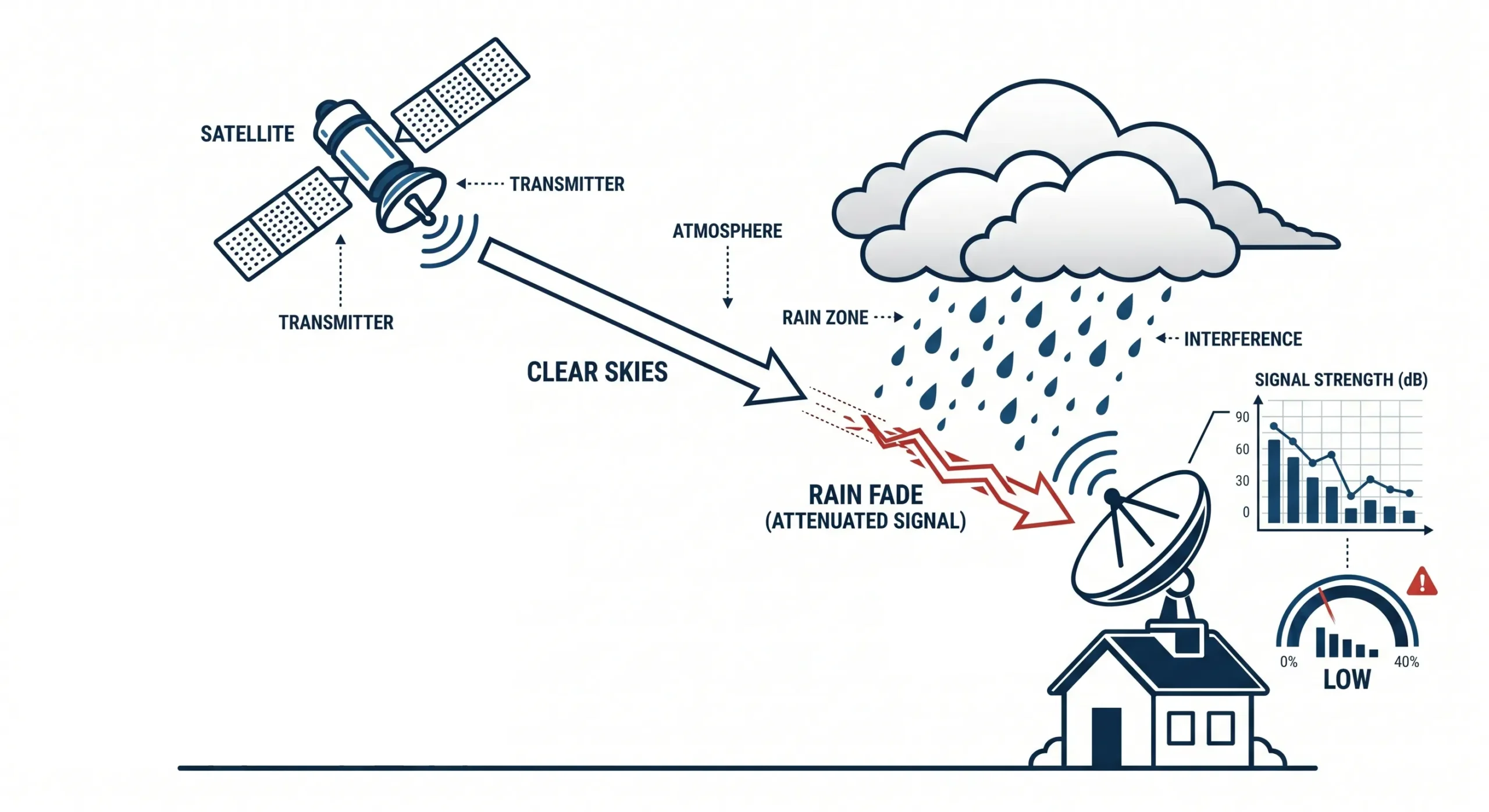
I learned about rain fade the hard way. Early in my career, I believed that designing a satellite system with a 3-5 dB link margin was enough to handle any weather. I felt confident in my calculations. But then a real tropical downpour hit. I watched our system's carrier-to-noise ratio plummet to just 3 dB, right on the edge of failure. That day, I gained a profound respect for the power of rain fade. The experience taught me a crucial lesson: a static power margin is just the first, most basic step. Truly resilient systems require a more intelligent, dynamic approach. This involves not just having extra power on standby, but actively managing it and adapting the signal itself to survive the storm.
Why is a simple link margin not enough for severe rain fade?
You have carefully budgeted a 5 dB link margin for rain in your system design. But a sudden, intense storm can cause 10 dB or more of attenuation3, completely breaking your link and proving your planning insufficient.
A static link margin is often not enough because rainfall intensity is unpredictable and can easily exceed your planned buffer. Deeper fades require a dynamic response, as a fixed margin cannot adapt to real-time weather changes, leading to link failure when you need it most.
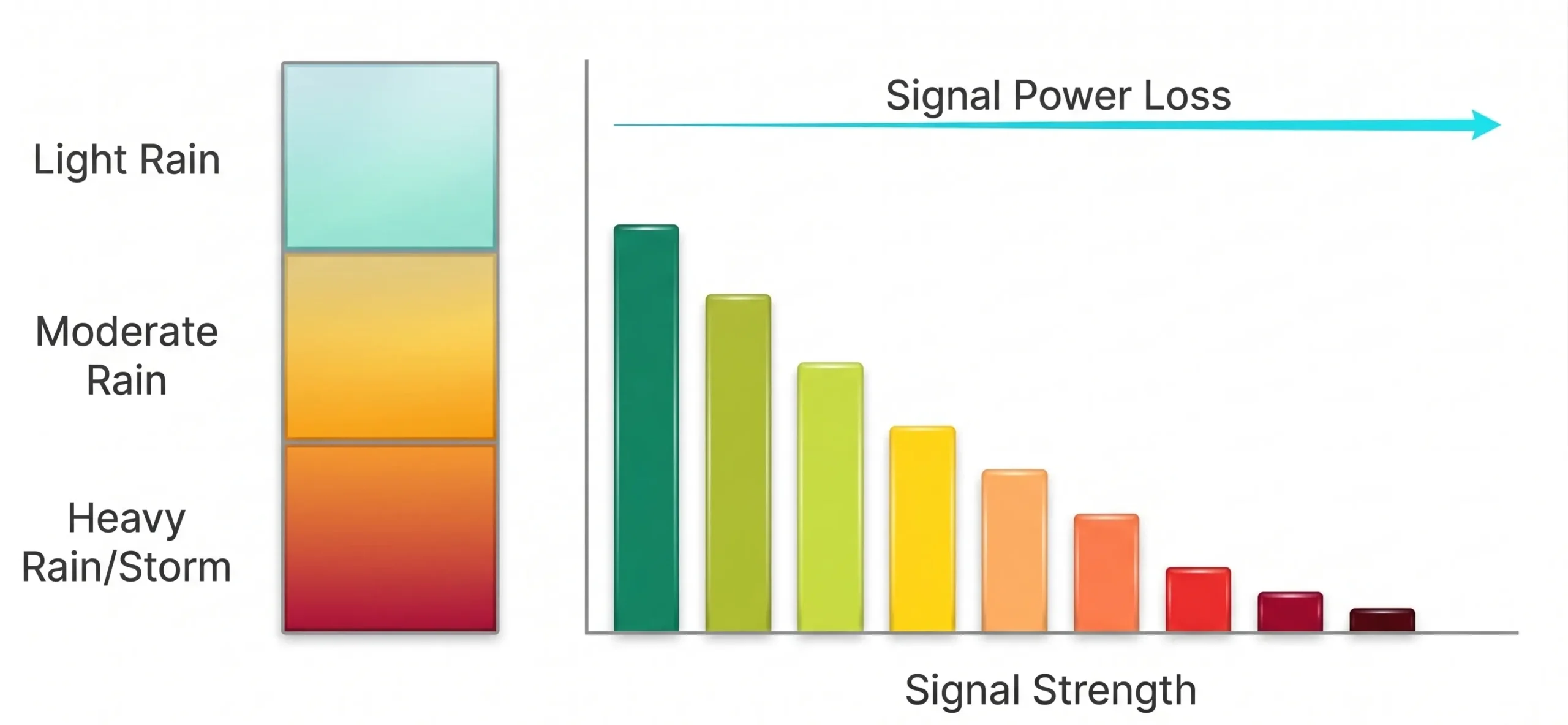
In my first satellite system design, I was convinced that setting a 3-5 dB margin was a safe bet. This "link margin" is extra power budgeted into the system to handle expected signal losses. However, I quickly discovered that rain is not a predictable, uniform event. The problem with a static margin is that it assumes a worst-case scenario that may be either too optimistic or too pessimistic. An intense, localized downpour, especially at higher frequencies like Ka-band or Ku-band, can introduce far more attenuation than a simple margin can cover. For example, a heavy storm can introduce 10, 15, or even 20 dB of loss, blowing right past a 5 dB safety net. The link simply breaks. Relying solely on this fixed buffer is like building a dam to a certain height without considering the possibility of a historic flood. It works for average rainfall, but fails catastrophically during extreme events.
Understanding Rain Attenuation by Frequency
The impact of rain is not the same across all satellite bands. Higher frequencies have shorter wavelengths, which are closer in size to raindrops4. This causes them to be more easily absorbed and scattered by rain, leading to much higher signal loss.
| Frequency Band | Wavelength | Typical Rain Attenuation5 | Use Case Examples |
|---|---|---|---|
| L-Band | ~20 cm | Very Low | Mobile Satellite Services, GPS |
| C-Band | ~6 cm | Low to Moderate | TV Broadcasting, VSAT Networks |
| Ku-Band | ~2 cm | Умерена до Висока | DTH TV, Broadband Internet |
| cURL Too many subrequests by single Worker invocation. To configure this limit, refer to https://developers.cloudflare.com/workers/wrangler/configuration/#limits | ~1 cm | High to Severe | High-Throughput Satellites (HTS) |
As you can see, engineers working with Ka-band systems face a much greater challenge from rain fade than those using C-band. This is why a simple, one-size-fits-all margin is an outdated strategy for modern high-throughput systems.
How does Uplink Power Control (UPC) keep your signal strong during a storm?
Rain starts falling, and your signal strength begins to drop dangerously low. Without immediate intervention, the entire communication link is at risk of failing. Uplink Power Control automatically boosts your signal to power through the weather.
cURL Too many subrequests by single Worker invocation. To configure this limit, refer to https://developers.cloudflare.com/workers/wrangler/configuration/#limits.
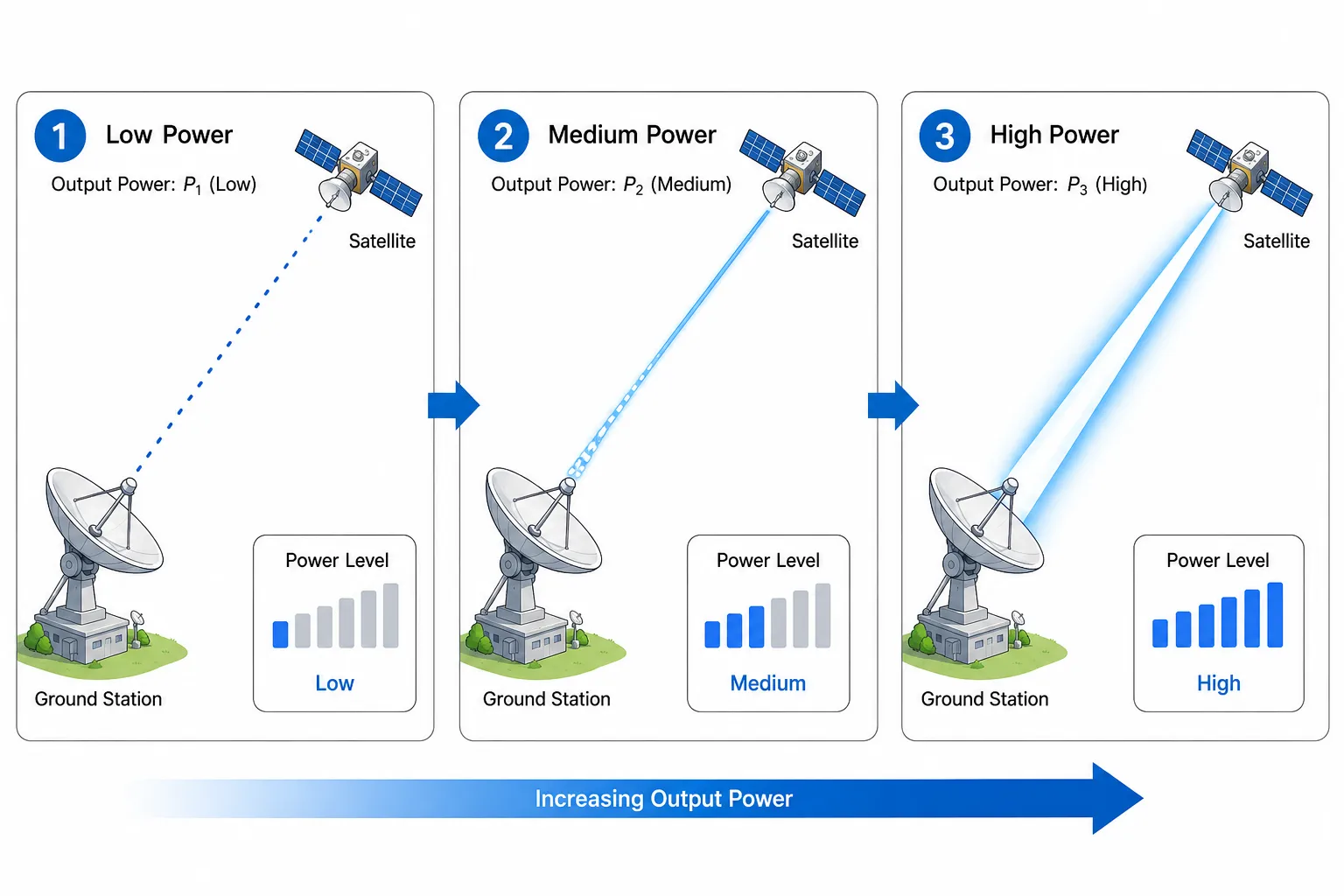
cURL Too many subrequests by single Worker invocation. To configure this limit, refer to https://developers.cloudflare.com/workers/wrangler/configuration/#limits cURL Too many subrequests by single Worker invocation. To configure this limit, refer to https://developers.cloudflare.com/workers/wrangler/configuration/#limits6 cURL Too many subrequests by single Worker invocation. To configure this limit, refer to https://developers.cloudflare.com/workers/wrangler/configuration/#limits cURL Too many subrequests by single Worker invocation. To configure this limit, refer to https://developers.cloudflare.com/workers/wrangler/configuration/#limits cURL Too many subrequests by single Worker invocation. To configure this limit, refer to https://developers.cloudflare.com/workers/wrangler/configuration/#limits cURL Too many subrequests by single Worker invocation. To configure this limit, refer to https://developers.cloudflare.com/workers/wrangler/configuration/#limits, cURL Too many subrequests by single Worker invocation. To configure this limit, refer to https://developers.cloudflare.com/workers/wrangler/configuration/#limits.
cURL Too many subrequests by single Worker invocation. To configure this limit, refer to https://developers.cloudflare.com/workers/wrangler/configuration/#limits
cURL Too many subrequests by single Worker invocation. To configure this limit, refer to https://developers.cloudflare.com/workers/wrangler/configuration/#limits.
- cURL Too many subrequests by single Worker invocation. To configure this limit, refer to https://developers.cloudflare.com/workers/wrangler/configuration/#limits cURL Too many subrequests by single Worker invocation. To configure this limit, refer to https://developers.cloudflare.com/workers/wrangler/configuration/#limits.
- cURL Too many subrequests by single Worker invocation. To configure this limit, refer to https://developers.cloudflare.com/workers/wrangler/configuration/#limits cURL Too many subrequests by single Worker invocation. To configure this limit, refer to https://developers.cloudflare.com/workers/wrangler/configuration/#limits.
- cURL Too many subrequests by single Worker invocation. To configure this limit, refer to https://developers.cloudflare.com/workers/wrangler/configuration/#limits cURL Too many subrequests by single Worker invocation. To configure this limit, refer to https://developers.cloudflare.com/workers/wrangler/configuration/#limits.
cURL Too many subrequests by single Worker invocation. To configure this limit, refer to https://developers.cloudflare.com/workers/wrangler/configuration/#limits.
cURL Too many subrequests by single Worker invocation. To configure this limit, refer to https://developers.cloudflare.com/workers/wrangler/configuration/#limits
cURL Too many subrequests by single Worker invocation. To configure this limit, refer to https://developers.cloudflare.com/workers/wrangler/configuration/#limits.
cURL Too many subrequests by single Worker invocation. To configure this limit, refer to https://developers.cloudflare.com/workers/wrangler/configuration/#limits.
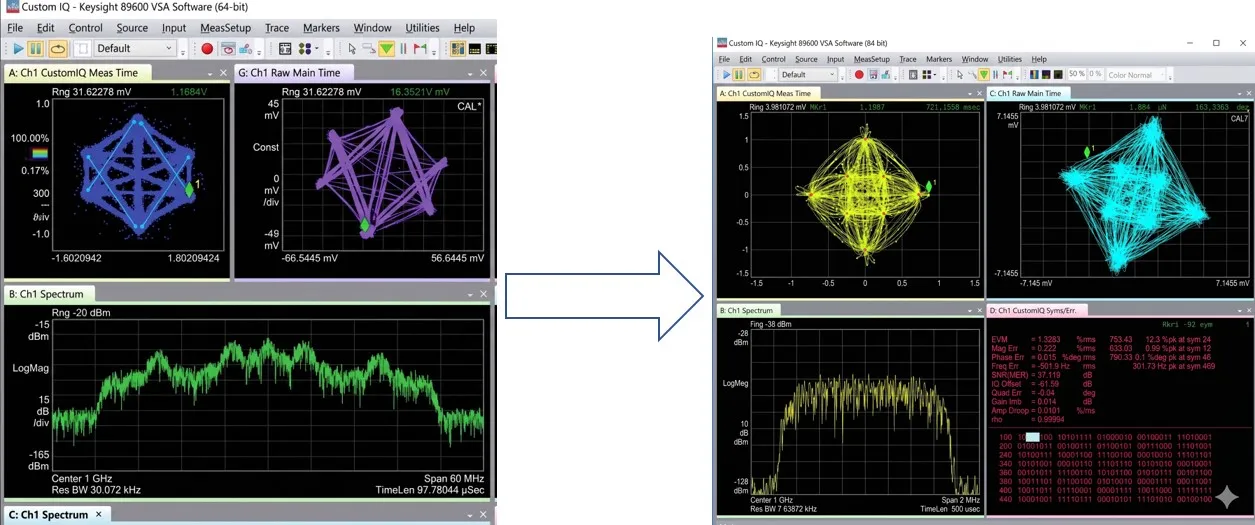
cURL Too many subrequests by single Worker invocation. To configure this limit, refer to https://developers.cloudflare.com/workers/wrangler/configuration/#limits cURL Too many subrequests by single Worker invocation. To configure this limit, refer to https://developers.cloudflare.com/workers/wrangler/configuration/#limits7 is far better than a complete outage.
The Trade-Off: Speed vs. Robustness
The genius of ACM is its ability to find the optimal balance between data throughput and link reliability in real-time. This table illustrates the relationship between different modulation schemes.
| MODCOD Scheme | Required C/N (approx.) | Data Rate Efficiency | Robustness |
|---|---|---|---|
| 16QAM | High (~12 dB) | Много висока | Low |
| 8PSK | Medium (~8 dB) | Висока | Medium |
| QPSK | Low (~5 dB) | Medium | Висока |
| BPSK | Very Low (~2 dB) | Low | Много висока |
During a rain event, an ACM-enabled system might automatically shift from 16QAM down to QPSK. The user might notice a slower connection, but their video call or data transfer continues without interruption. This is the key to achieving the "five nines" (99.999%) availability that critical communication systems demand.
How do you select the right hardware to build a resilient RF system?
You have a great design on paper to combat rain fade, combining UPC and ACM. But if you build this sophisticated system using subpar components, it will inevitably fail under the pressure of a real storm.
To build a resilient system, you must select RF components with proven reliability, wide operating ranges, and excellent performance. Focus on amplifiers with high power and efficiency, LNAs with a very low noise figure, and switches with fast response times. These form the foundation for any dynamic rain fade mitigation strategy.

A system is only as strong as its weakest link. A brilliant rain fade mitigation strategy means nothing if the hardware can't execute it. The demands of UPC and system redundancy put immense stress on the core RF components. This is why selecting the right hardware is not just a detail; it's fundamental. For the receiving end, the Low Noise Amplifier (LNA) is critical. A better LNA improves the system's G/T ratio8, meaning it can "hear" a weaker signal. Our Safari Microwave LNAs feature a noise figure as low as 0.5 dB even at 110 GHz, giving your system the best possible chance to lock onto the signal. For redundancy and switching, you need speed and reliability. If a primary amplifier fails, you need to switch to a backup instantly. Our PIN switches offer a switching speed of just 50 nanoseconds and our high-power versions can handle up to 200 watts, ensuring your backup systems engage flawlessly. At Safari Microwave, we build on 30 years of engineering experience to design and manufacture components that thrive under pressure. Every component is 100% tested to ensure stable, reliable performance because we know our customers are building systems where failure is not an option.
Building Blocks for a Rain-Proof System
When assembling your system, prioritize these components:
- High-Power BUC/Amplifier: Choose one with a wide dynamic range and enough power overhead for UPC. Our 3000W saturated power amplifier is an industry leader in this category.
- Ultra-Low Noise LNA: cURL Too many subrequests by single Worker invocation. To configure this limit, refer to https://developers.cloudflare.com/workers/wrangler/configuration/#limits cURL Too many subrequests by single Worker invocation. To configure this limit, refer to https://developers.cloudflare.com/workers/wrangler/configuration/#limits cURL Too many subrequests by single Worker invocation. To configure this limit, refer to https://developers.cloudflare.com/workers/wrangler/configuration/#limits.
- cURL Too many subrequests by single Worker invocation. To configure this limit, refer to https://developers.cloudflare.com/workers/wrangler/configuration/#limits cURL Too many subrequests by single Worker invocation. To configure this limit, refer to https://developers.cloudflare.com/workers/wrangler/configuration/#limits cURL Too many subrequests by single Worker invocation. To configure this limit, refer to https://developers.cloudflare.com/workers/wrangler/configuration/#limits и cURL Too many subrequests by single Worker invocation. To configure this limit, refer to https://developers.cloudflare.com/workers/wrangler/configuration/#limits cURL Too many subrequests by single Worker invocation. To configure this limit, refer to https://developers.cloudflare.com/workers/wrangler/configuration/#limits.
- cURL Too many subrequests by single Worker invocation. To configure this limit, refer to https://developers.cloudflare.com/workers/wrangler/configuration/#limits cURL Too many subrequests by single Worker invocation. To configure this limit, refer to https://developers.cloudflare.com/workers/wrangler/configuration/#limits cURL Too many subrequests by single Worker invocation. To configure this limit, refer to https://developers.cloudflare.com/workers/wrangler/configuration/#limits, cURL Too many subrequests by single Worker invocation. To configure this limit, refer to https://developers.cloudflare.com/workers/wrangler/configuration/#limits.
cURL Too many subrequests by single Worker invocation. To configure this limit, refer to https://developers.cloudflare.com/workers/wrangler/configuration/#limits.
Заключение
cURL Too many subrequests by single Worker invocation. To configure this limit, refer to https://developers.cloudflare.com/workers/wrangler/configuration/#limits.
"cURL Too many subrequests by single Worker invocation. To configure this limit, refer to https://developers.cloudflare.com/workers/wrangler/configuration/#limits. ↩
"cURL Too many subrequests by single Worker invocation. To configure this limit, refer to https://developers.cloudflare.com/workers/wrangler/configuration/#limits. ↩
"cURL Too many subrequests by single Worker invocation. To configure this limit, refer to https://developers.cloudflare.com/workers/wrangler/configuration/#limits. ↩
"cURL Too many subrequests by single Worker invocation. To configure this limit, refer to https://developers.cloudflare.com/workers/wrangler/configuration/#limits. ↩
"cURL Too many subrequests by single Worker invocation. To configure this limit, refer to https://developers.cloudflare.com/workers/wrangler/configuration/#limits. ↩
"cURL Too many subrequests by single Worker invocation. To configure this limit, refer to https://developers.cloudflare.com/workers/wrangler/configuration/#limits. ↩
"cURL Too many subrequests by single Worker invocation. To configure this limit, refer to https://developers.cloudflare.com/workers/wrangler/configuration/#limits. ↩
"cURL Too many subrequests by single Worker invocation. To configure this limit, refer to https://developers.cloudflare.com/workers/wrangler/configuration/#limits. ↩

 Bulgarian
  English
  Spanish
  French
  Japanese
  Arabic
  Vietnamese
  Indonesian
  Hindi
Hindi  Danish