
Struggling with weak satellite signals and poor SNR1? This frustration leads to data loss and dropped connections, jeopardizing critical missions and wasting valuable time and resources.
To improve satellite signal strength and SNR, focus on key areas. Ensure precise antenna alignment, use a high-gain antenna, and optimize the feedhorn2 position. Also, employ a high-quality Low-Noise Amplifier (LNA3) to minimize system noise and amplify the weak incoming signal effectively.
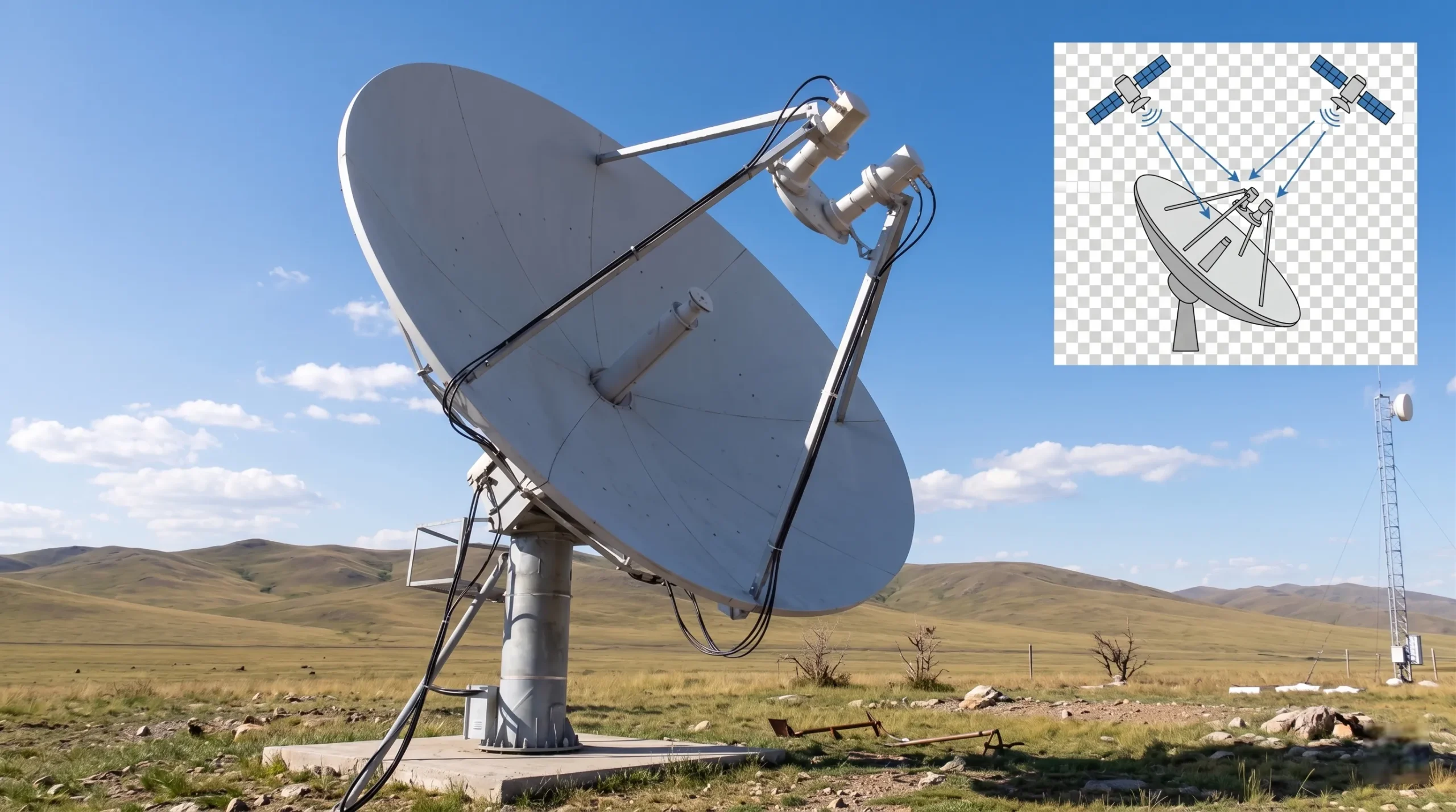
I remember when I first started in satellite communications. The sheer distance the signals travel, at least 500 kilometers, boggled my mind. I constantly worried, "How can we trust a signal that's traveled so far? Won't it be distorted?" An experienced engineer gave me a piece of advice that stuck with me. He said, "Get the antenna feed position right, and you've solved 80% of your problem." That simple tip opened my eyes to the practical side of things. It's not just about massive dishes; it's about the fine details. Let's explore some of these practical tips that can make a huge difference.
Is Your Antenna Alignment and Feed Position Truly Optimized?
You've pointed your antenna, but the signal is still weak. You re-checked the coordinates, yet performance is lacking. Could a tiny misalignment be the real culprit behind your problems?
Yes, even a slight error in antenna pointing or feedhorn positioning can cause significant signal loss. Precise alignment with the satellite and placing the feedhorn at the antenna's exact focal point4 are critical for maximizing signal capture and achieving a high signal-to-noise ratio (SNR).
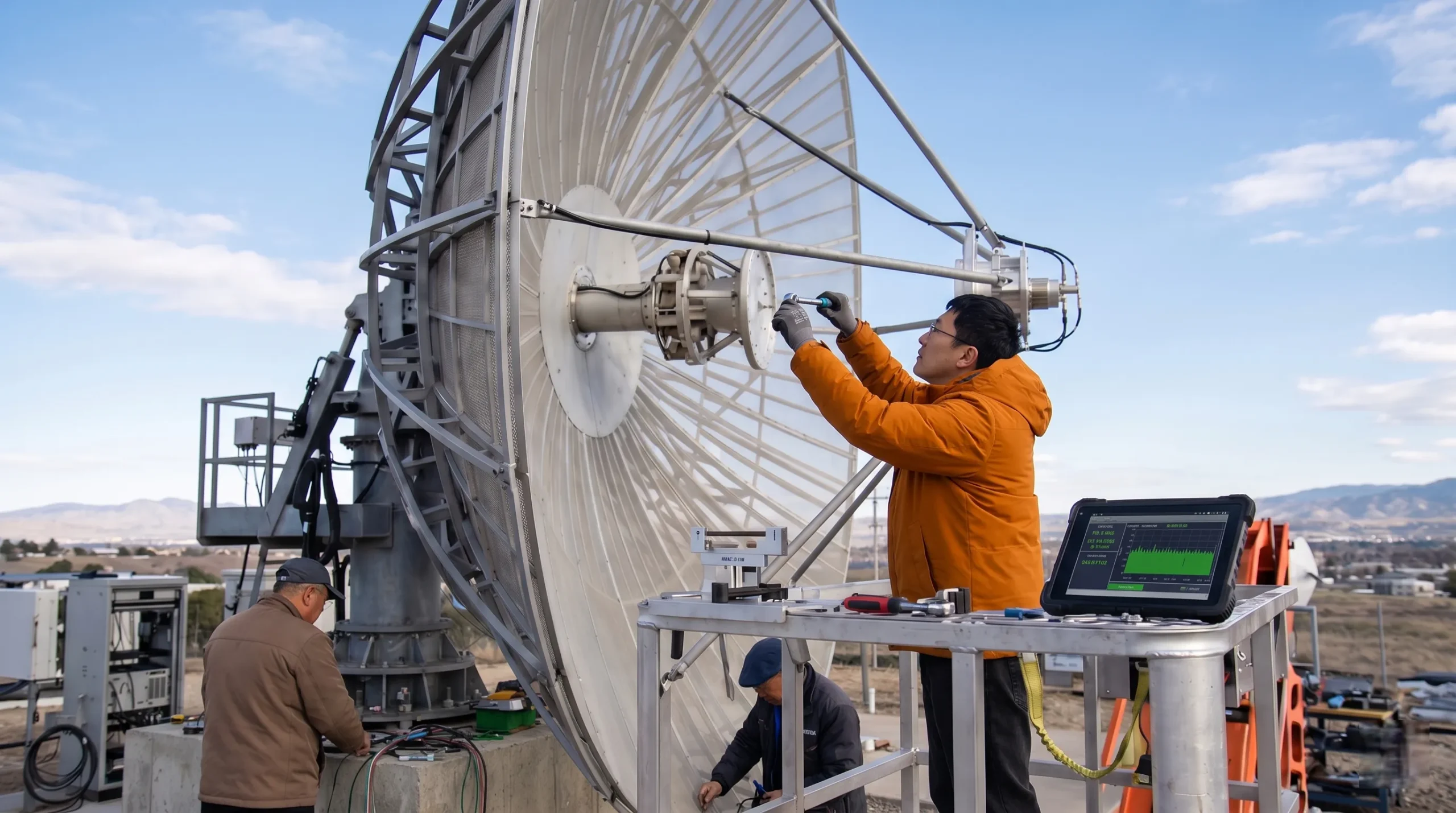
That engineer's advice about the feedhorn was a game-changer for me. It highlights a fundamental principle of parabolic antennas. The dish works by collecting incoming satellite signals and reflecting them to a single, precise spot: the focal point. The feedhorn sits at this exact point to capture all that focused energy. If the feedhorn is even slightly off—too far in, too far out, or off-center—the signal energy spreads out and misses the horn. This directly results in a weaker signal entering your system. This is why meticulous physical adjustment is so important. You need to ensure the feedhorn is perfectly positioned. Beyond that, the antenna's pointing accuracy, or azimuth and elevation, must be perfect. We also need to consider polarization alignment, often called skew. Getting this wrong can cause cross-pol interference and further degrade the signal. It's a combination of these three precise alignments that truly maximizes performance.
Key Alignment Checks
| Alignment Type | Objective | Common Tools |
|---|---|---|
| Azimuth/Elevation | Point the antenna directly at the satellite. | Compass, Inclinometer, Spectrum Analyzer |
| Focal Distance | Place the feedhorn at the dish's focal point. | Manufacturer Specs, Measuring Tape |
| Polarization5 (Skew) | Match the feedhorn's polarization to the satellite's. | Spectrum Analyzer, Signal Meter |
How Does a Low-Noise Amplifier (LNA) Impact Your SNR?
Your system captures a signal, but it's buried in noise. Filtering helps, but the original signal-to-noise ratio is already poor. Is your first amplification stage letting you down?
The Low-Noise Amplifier (LNA) is your first line of defense against noise. It amplifies the extremely weak satellite signal while adding minimal noise itself. A high-quality LNA with a very low noise figure is essential for preserving the original SNR of the signal.
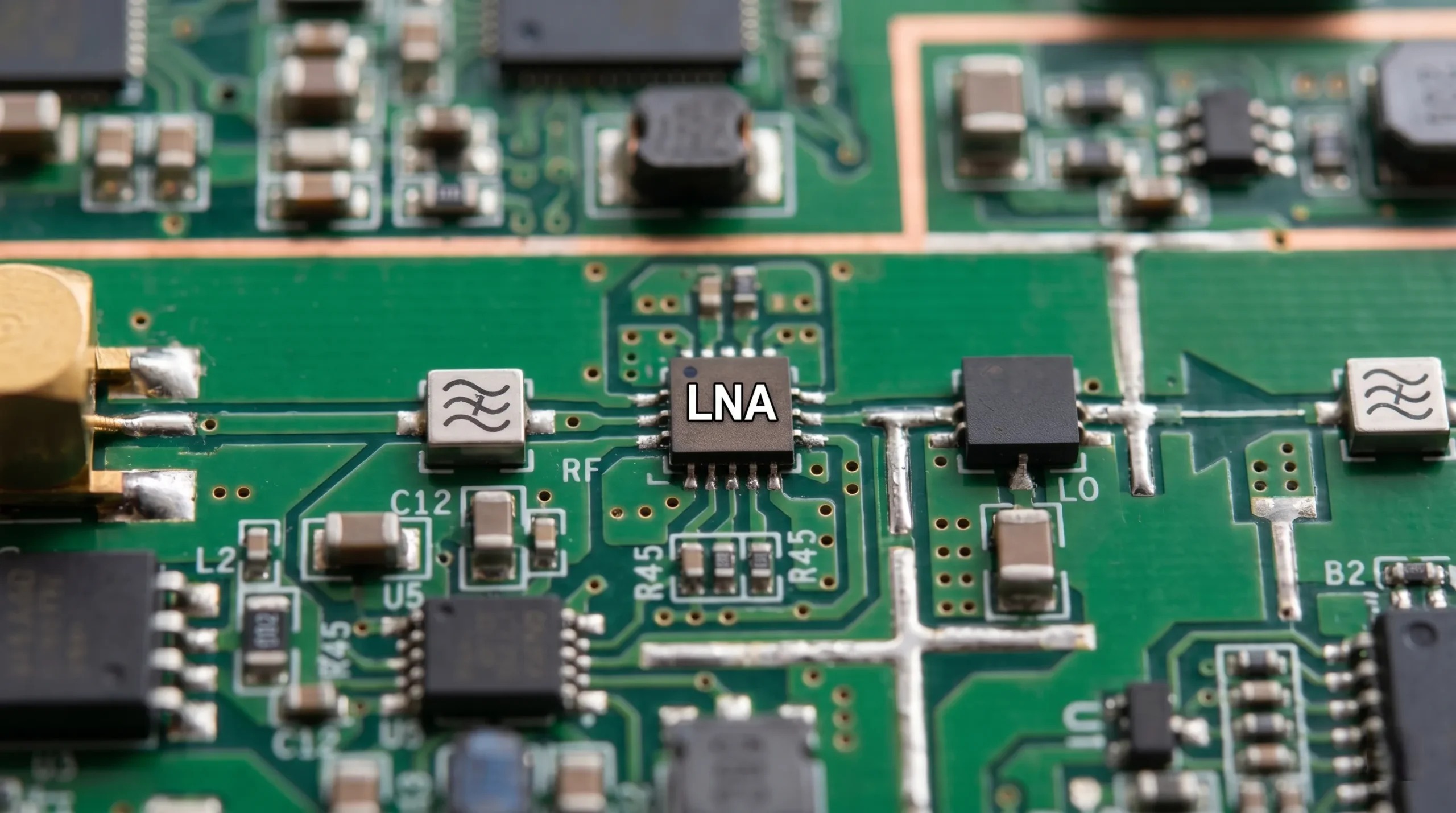
The LNA is the first active component6 the signal sees after the antenna. This position is critical. Any noise it adds gets amplified by every subsequent stage in your receiver chain. This is why the LNA's Noise Figure (NF) is arguably its most important specification. A lower noise figure means the LNA adds less of its own noise, preserving the delicate SNR of the incoming signal. For example, an LNA with a 0.5 dB noise figure will deliver a significantly cleaner signal than one with a 1.5 dB noise figure. In my work, I've learned that every fraction of a decibel matters, especially when dealing with weak signals from distant satellites. At Safari Microwave, we've pushed the boundaries to develop LNAs with noise figures as low as 0.5 dB, even at frequencies up to 110 GHz. This focus on minimizing noise at the very first step gives the entire system a massive advantage in recovering a clear signal.
LNA Specification Impact
| cURL Too many subrequests by single Worker invocation. To configure this limit, refer to https://developers.cloudflare.com/workers/wrangler/configuration/#limits | Значение | Good Value | cURL Too many subrequests by single Worker invocation. To configure this limit, refer to https://developers.cloudflare.com/workers/wrangler/configuration/#limits |
|---|---|---|---|
| Ниво на шум (NF) | cURL Too many subrequests by single Worker invocation. To configure this limit, refer to https://developers.cloudflare.com/workers/wrangler/configuration/#limits. | cURL Too many subrequests by single Worker invocation. To configure this limit, refer to https://developers.cloudflare.com/workers/wrangler/configuration/#limits | cURL Too many subrequests by single Worker invocation. To configure this limit, refer to https://developers.cloudflare.com/workers/wrangler/configuration/#limits |
| Усилване | cURL Too many subrequests by single Worker invocation. To configure this limit, refer to https://developers.cloudflare.com/workers/wrangler/configuration/#limits. | cURL Too many subrequests by single Worker invocation. To configure this limit, refer to https://developers.cloudflare.com/workers/wrangler/configuration/#limits | cURL Too many subrequests by single Worker invocation. To configure this limit, refer to https://developers.cloudflare.com/workers/wrangler/configuration/#limits |
| Честотен диапазон | cURL Too many subrequests by single Worker invocation. To configure this limit, refer to https://developers.cloudflare.com/workers/wrangler/configuration/#limits. | cURL Too many subrequests by single Worker invocation. To configure this limit, refer to https://developers.cloudflare.com/workers/wrangler/configuration/#limits | cURL Too many subrequests by single Worker invocation. To configure this limit, refer to https://developers.cloudflare.com/workers/wrangler/configuration/#limits |
Are Hidden Losses in Your System Degrading Your Signal?
cURL Too many subrequests by single Worker invocation. To configure this limit, refer to https://developers.cloudflare.com/workers/wrangler/configuration/#limits
cURL Too many subrequests by single Worker invocation. To configure this limit, refer to https://developers.cloudflare.com/workers/wrangler/configuration/#limits.
cURL Too many subrequests by single Worker invocation. To configure this limit, refer to https://developers.cloudflare.com/workers/wrangler/configuration/#limits.
cURL Too many subrequests by single Worker invocation. To configure this limit, refer to https://developers.cloudflare.com/workers/wrangler/configuration/#limits
- cURL Too many subrequests by single Worker invocation. To configure this limit, refer to https://developers.cloudflare.com/workers/wrangler/configuration/#limits cURL Too many subrequests by single Worker invocation. To configure this limit, refer to https://developers.cloudflare.com/workers/wrangler/configuration/#limits.
- cURL Too many subrequests by single Worker invocation. To configure this limit, refer to https://developers.cloudflare.com/workers/wrangler/configuration/#limits cURL Too many subrequests by single Worker invocation. To configure this limit, refer to https://developers.cloudflare.com/workers/wrangler/configuration/#limits.
- cURL Too many subrequests by single Worker invocation. To configure this limit, refer to https://developers.cloudflare.com/workers/wrangler/configuration/#limits cURL Too many subrequests by single Worker invocation. To configure this limit, refer to https://developers.cloudflare.com/workers/wrangler/configuration/#limits.
- cURL Too many subrequests by single Worker invocation. To configure this limit, refer to https://developers.cloudflare.com/workers/wrangler/configuration/#limits cURL Too many subrequests by single Worker invocation. To configure this limit, refer to https://developers.cloudflare.com/workers/wrangler/configuration/#limits passive component7s have higher intrinsic loss.
- Tight Bends: Bending cables too sharply can increase loss and reflections.
What Can You Do About Signal Interference?
Your signal strength looks good, but the data is still corrupt. Unseen signals could be interfering with your link. How can you identify and fight this invisible enemy?
Interference from other satellites, terrestrial microwave links, or even poorly shielded electronics can severely degrade your SNR. Use a spectrum analyzer to identify interfering signals and employ high-quality bandpass filters to reject out-of-band noise and interference, ensuring your receiver only sees the desired signal.
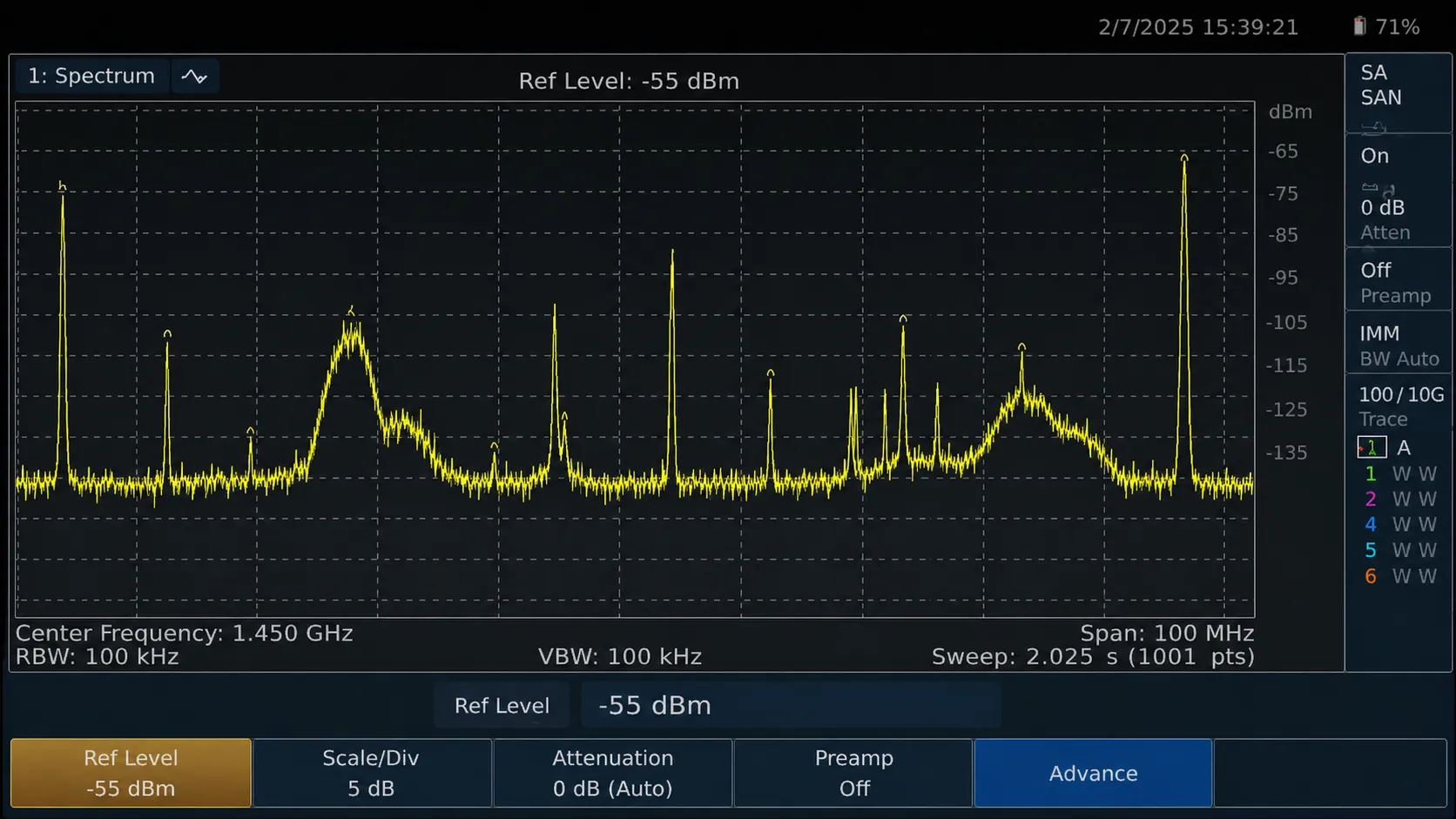
Interference is a constant battle in satellite communications. The airwaves are crowded. Your antenna might be picking up faint signals from an adjacent satellite, or a nearby cell tower8 could be blasting noise into your receiver. I always start troubleshooting with a spectrum analyzer. It gives you a visual map of all the signals your antenna is receiving, not just the one you want. This allows you to "see" the interference and identify its frequency and strength. Once you know what you're up against, the best solution is often a good bandpass filter. This component acts like a gatekeeper, allowing only the frequencies from your desired satellite to pass through while blocking everything else. A sharp, high-rejection filter can work wonders in cleaning up a noisy environment. Another source of interference can be your antenna itself. An antenna with poor sidelobe performance is more likely to pick up signals from off-axis sources, so investing in a quality dish is also a key part of the solution.
Common Interference Mitigation Strategies
| Interference Type | Common Cause | Mitigation Strategy |
|---|---|---|
| Adjacent Satellite (ASI) | Poor antenna pointing or high sidelobes. | Re-align antenna; use a high-performance antenna. |
| Cross-Polarization (XPI) | Incorrect polarization alignment (skew). | Adjust feedhorn skew to optimize polarization. |
| Terrestrial Interference | Nearby cell towers, radar, Wi-Fi. | Install a high-rejection bandpass filter; use shielding. |
Заключение
Improving satellite signal is about details. Focus on precise antenna alignment, use a quality LNA, minimize system losses, and filter out interference. These steps will boost your signal and SNR.
"Signal-to-noise ratio - Wikipedia", https://en.wikipedia.org/wiki/Signal-to-noise_ratio. The term 'SNR' stands for Signal-to-Noise Ratio, a key metric in telecommunications and signal processing that quantifies the ratio of the desired signal power to the background noise power, typically expressed in decibels (dB). Evidence role: definition; source type: encyclopedia. Supports: SNR is a key metric in satellite communications, representing the ratio of signal power to noise power.. ↩
"Parabolic antenna - Wikipedia", https://en.wikipedia.org/wiki/Parabolic_antenna. The feedhorn is a critical component in parabolic antenna systems, positioned at the focal point to collect and guide the concentrated radio frequency energy from the dish into the receiver, as described in standard antenna engineering references. Evidence role: definition; source type: encyclopedia. Supports: The feedhorn sits at the focal point of a parabolic antenna to capture the reflected satellite signals and direct them into the receiver system.. ↩
"Safari Microwave's LNA", https://safarimw.com/wideband-low-noise-amplifier/. A Low-Noise Amplifier (LNA) is an electronic amplifier used to amplify very weak signals, such as those received by satellite antennas, while introducing minimal additional noise, thereby preserving the signal-to-noise ratio (SNR) in communication systems. ↩
"Parabolic antenna - Wikipedia", https://en.wikipedia.org/wiki/Parabolic_antenna. The focal point of a parabolic antenna is the specific location where all incoming parallel signals are reflected and concentrated, allowing the feedhorn to capture the maximum possible signal energy, as described in antenna theory literature. Evidence role: definition; source type: encyclopedia. Supports: The dish works by collecting incoming satellite signals and reflecting them to a single, precise spot: the focal point.. ↩
"[PDF] Polarization - RF Cafe", https://www.rfcafe.com/references/articles/Satellite-Comm-Lectures/Satellite-Comms-Polarization.pdf. Polarization in satellite communications refers to the orientation of the electromagnetic wave's electric field, and matching the polarization between the satellite and the receiving antenna is essential to maximize signal strength and minimize interference. Evidence role: definition; source type: encyclopedia. Supports: Polarization alignment, often called skew, is important in satellite communications because matching the feedhorn's polarization to the satellite's is necessary to maximize signal capture and reduce interference.. ↩
"Active and Passive Electronic Components: Key Differences", https://erieit.edu/introduction-active-vs-passive-electronic-components/. Technical literature and engineering textbooks define passive components as electronic devices that do not require external power to operate and do not amplify signals, such as cables, connectors, and waveguides, which are commonly used in satellite communication systems. Evidence role: definition; source type: education. Supports: Passive components like cables, connectors, and waveguides introduce insertion loss, directly reducing signal strength and degrading SNR in satellite communication systems. ↩
"Active and Passive Electronic Components: Key Differences", https://erieit.edu/introduction-active-vs-passive-electronic-components/. Technical literature and engineering textbooks define passive components as electronic devices that do not require external power to operate and do not amplify signals, such as cables, connectors, and waveguides, which are commonly used in satellite communication systems. Evidence role: definition; source type: education. Supports: Passive components like cables, connectors, and waveguides introduce insertion loss, directly reducing signal strength and degrading SNR in satellite communication systems. ↩
"[PDF] Characterizing Terrestrial GNSS Interference from Low Earth Orbit", https://radionavlab.ae.utexas.edu/wp-content/uploads/murrian_ion_gnss_2019.pdf. Cell towers are a common source of terrestrial radio frequency interference that can affect satellite communication systems, as documented in technical literature and regulatory guidelines on electromagnetic compatibility. Evidence role: mechanism; source type: encyclopedia. Supports: Nearby cell towers can be a source of terrestrial interference that degrades satellite signal quality.. Scope note: The extent of interference depends on frequency overlap, proximity, and shielding; not all cell towers will cause significant interference in every scenario. ↩

 Bulgarian
  English
  Spanish
  French
  Japanese
  Arabic
  Vietnamese
  Indonesian
  Hindi
Hindi  Danish